
 ไทย
ไทย


SEND A PARCEL

International Shipping from Thailand You Can Trust.
Better Value. Real Savings.
All-in-One Service
[CHECK SHIPPING RATE]

Why Choose Us
Trusted Global Partners
MADD is an official UPS Authorized Shipping Outlet and provides international shipping services through UPS, DHL Express, and SAGAWA Express for Japan.
27+ Years of Experience
Since 1999, MADD has built extensive experience in international shipping from Thailand, serving SMEs, e-commerce businesses, exporters, and individual customers.
Better Shipping Value with Transparent Pricing
Clear and competitive shipping rates with no hidden fees, helping you understand and control your shipping costs.
More Than Just Shipping
We handle your shipment in Thailand from receiving and checking goods from Thai suppliers to consolidation, packing, documentation, and shipment coordination, providing overseas customers with end-to-end support without the need to travel or manage local shipping operations.
One Partner for Multi-Supplier Shipping
We coordinate goods from multiple Thai suppliers, handling collection, consolidation, packing, and international shipment arrangements in one place. Every customer and every shipment is handled with care and attention to detail, from origin in Thailand through final delivery.

Our Strengths
 Service Excellence through Professional Teamwork
From shipment preparation to final delivery, our strong team takes responsibility for your shipment with experienced staff, a strong service mindset, and attention to detail, communicating in Thai, English, and Japanese and coordinating with UPS, DHL, and Sagawa Express in Thailand to simplify shipment processing.
 Deep Expertise in SMEs
We support SMEs, small businesses, and exporters with product collection, pre-shipment checking, consolidation, packing, and shipment coordination from multiple Thai suppliers. Quantity and condition checks, photo documentation, and reports help you track your purchases through to final delivery.
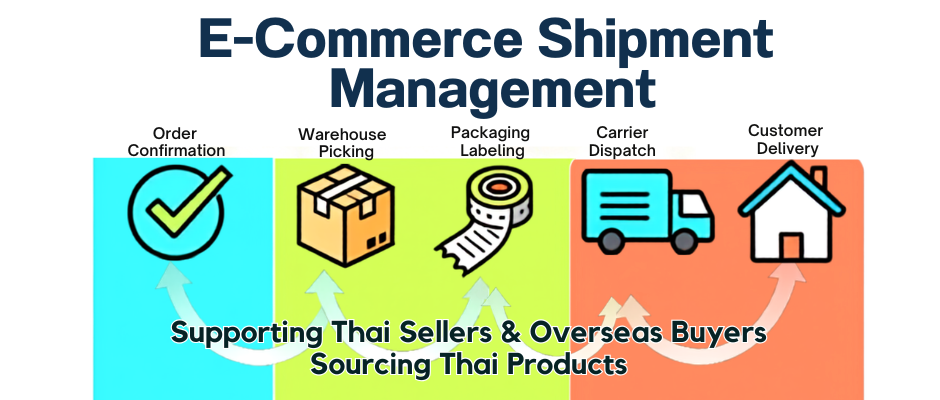 E-Commerce Shipment Management
We support online sellers and international buyers with shipment management for products sourced from Thailand — from product preparation and packing to documentation, export coordination, and final delivery.
 Personalized Solutions for Individual Shippers
Customized shipping support tailored to individual needs — for individuals, home-based entrepreneurs, travelers, and people relocating abroad, with guidance on choosing suitable shipping options, requirements, documentation, packing, and delivery.
Our service
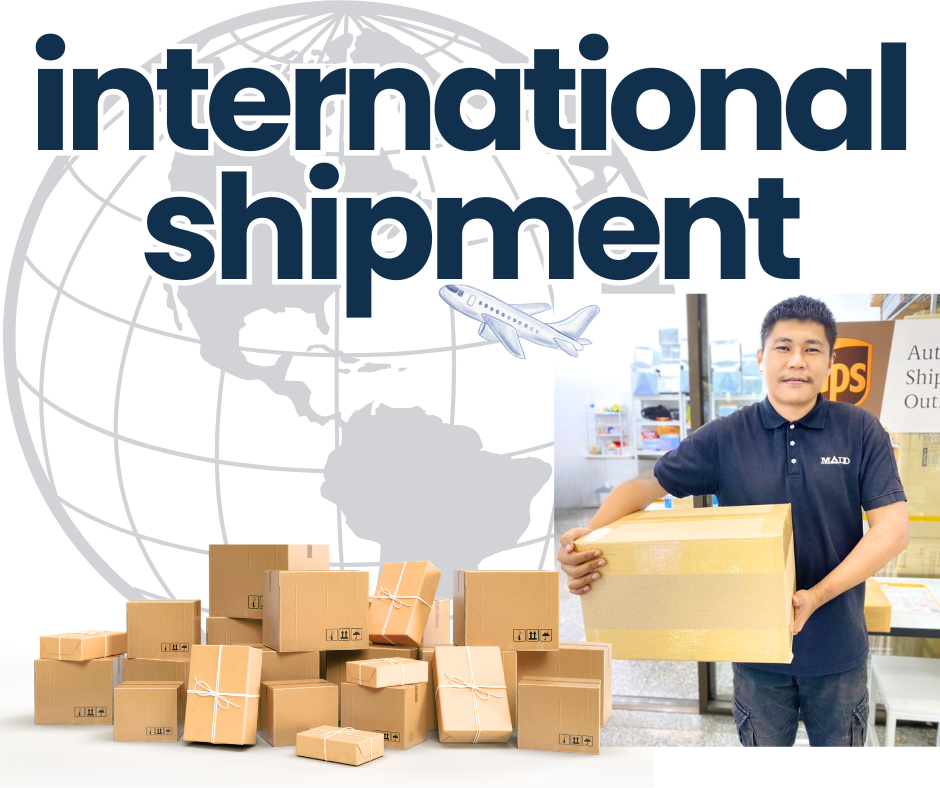
International Shipping
UPS, DHL & SAGAWA Express
Services for documents, personal items, and commercial goods, Read more…
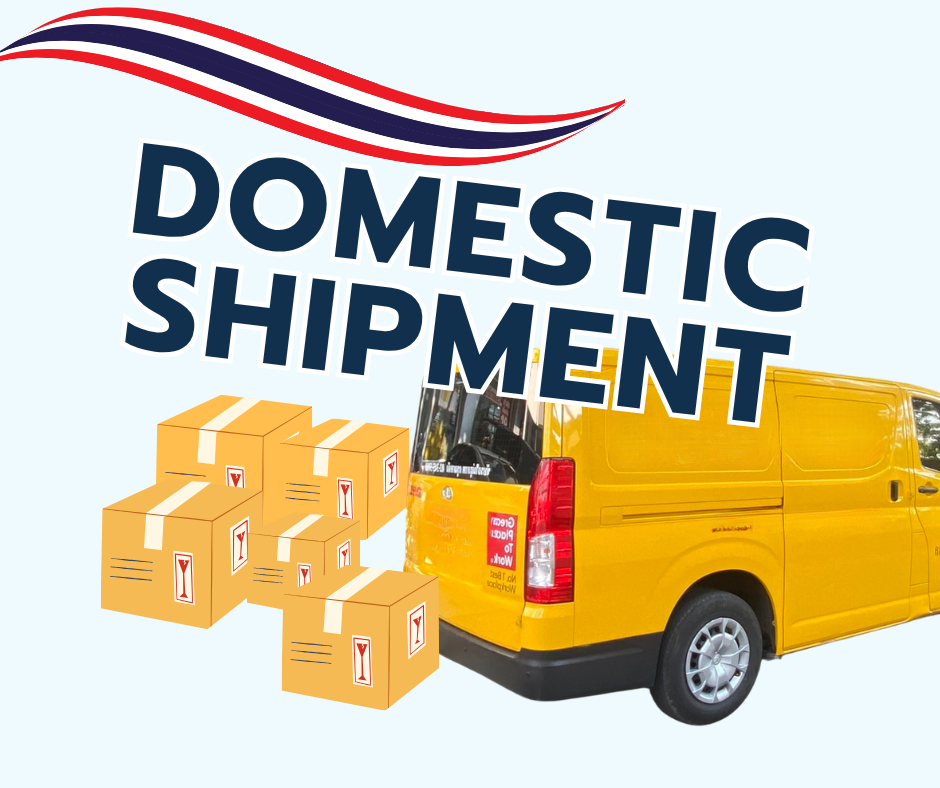 Domestic Shipping
DHL eCommerce & EMS Thailand Post
Nationwide delivery to the recipient’s address with shipment tracking, Read more…

Free Services
(For International Shipments)
Free Standard Boxes !!
Free Pickup !!
Free Packing !! Read more…
 Free Storage
Free storage for customers shipping with us, giving you more time to consolidate goods and prepare shipment documents. Read more…
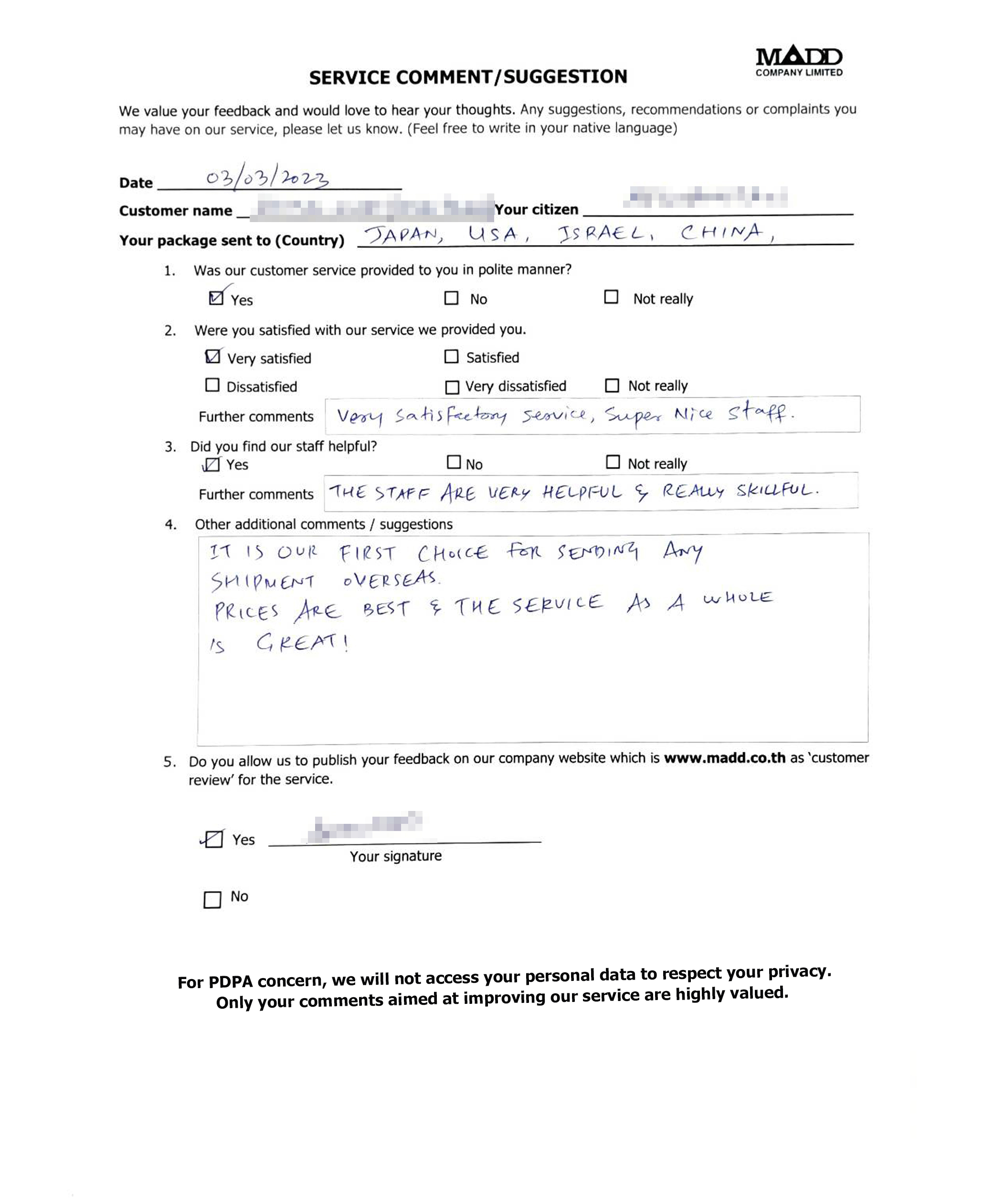
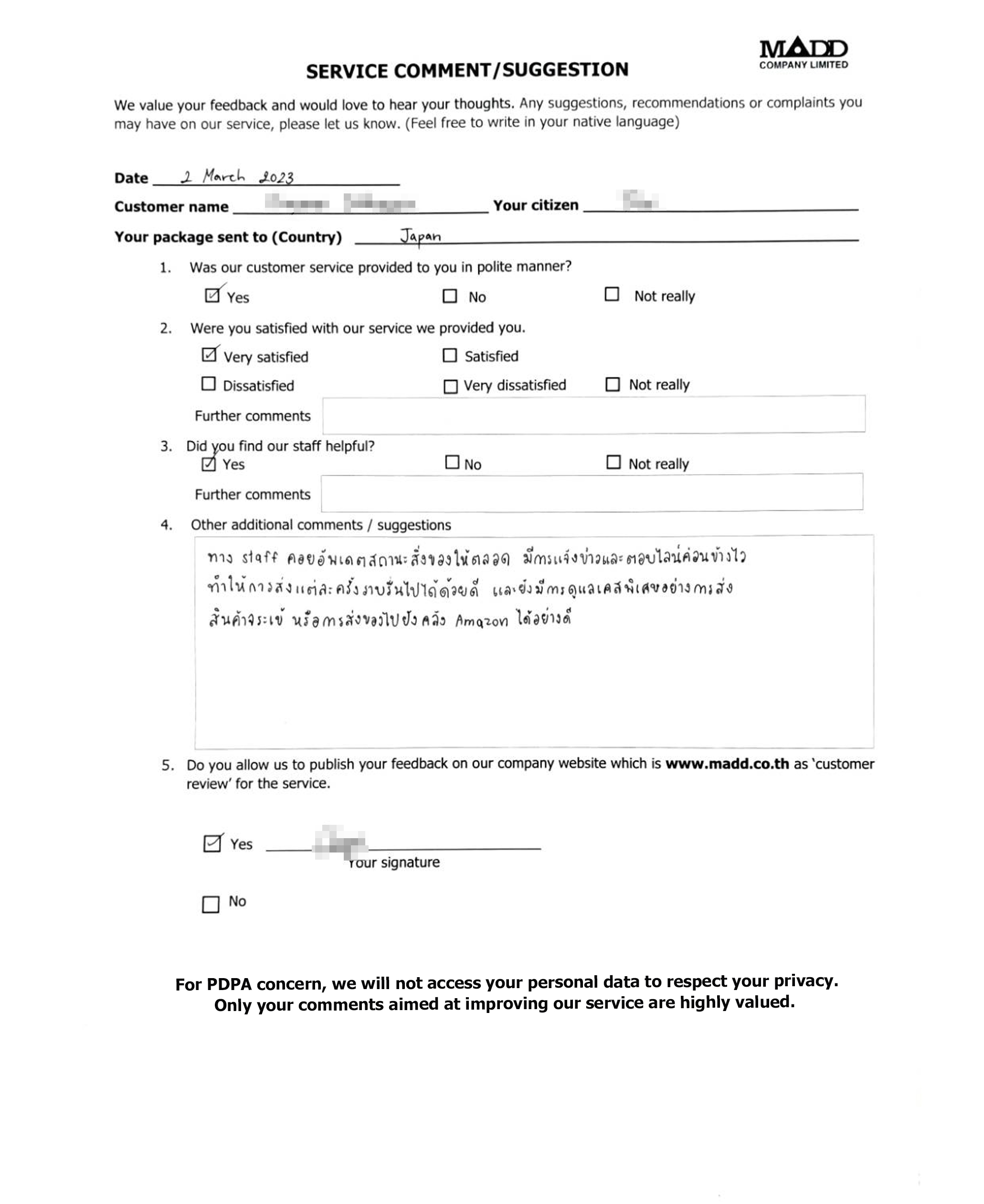
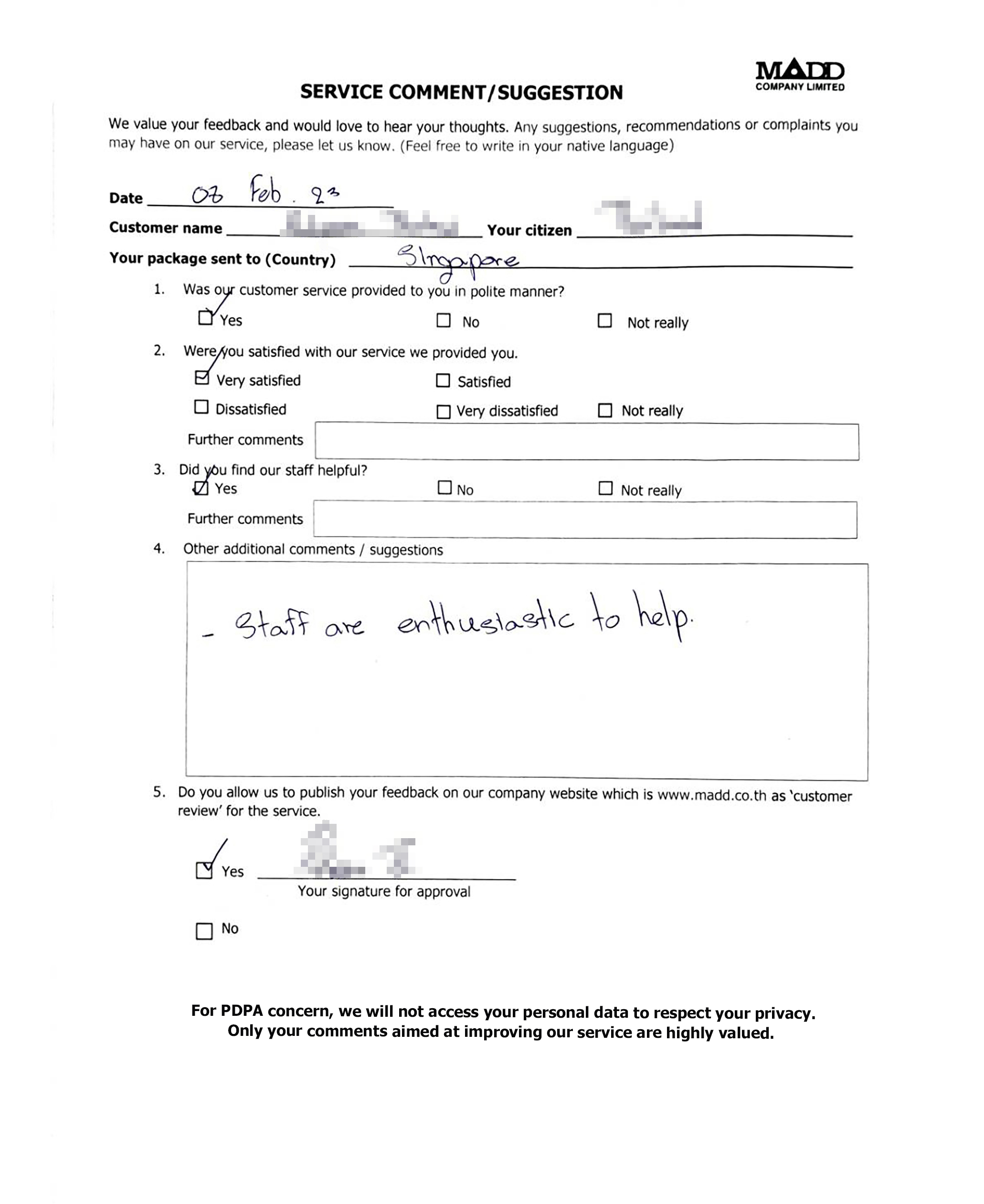
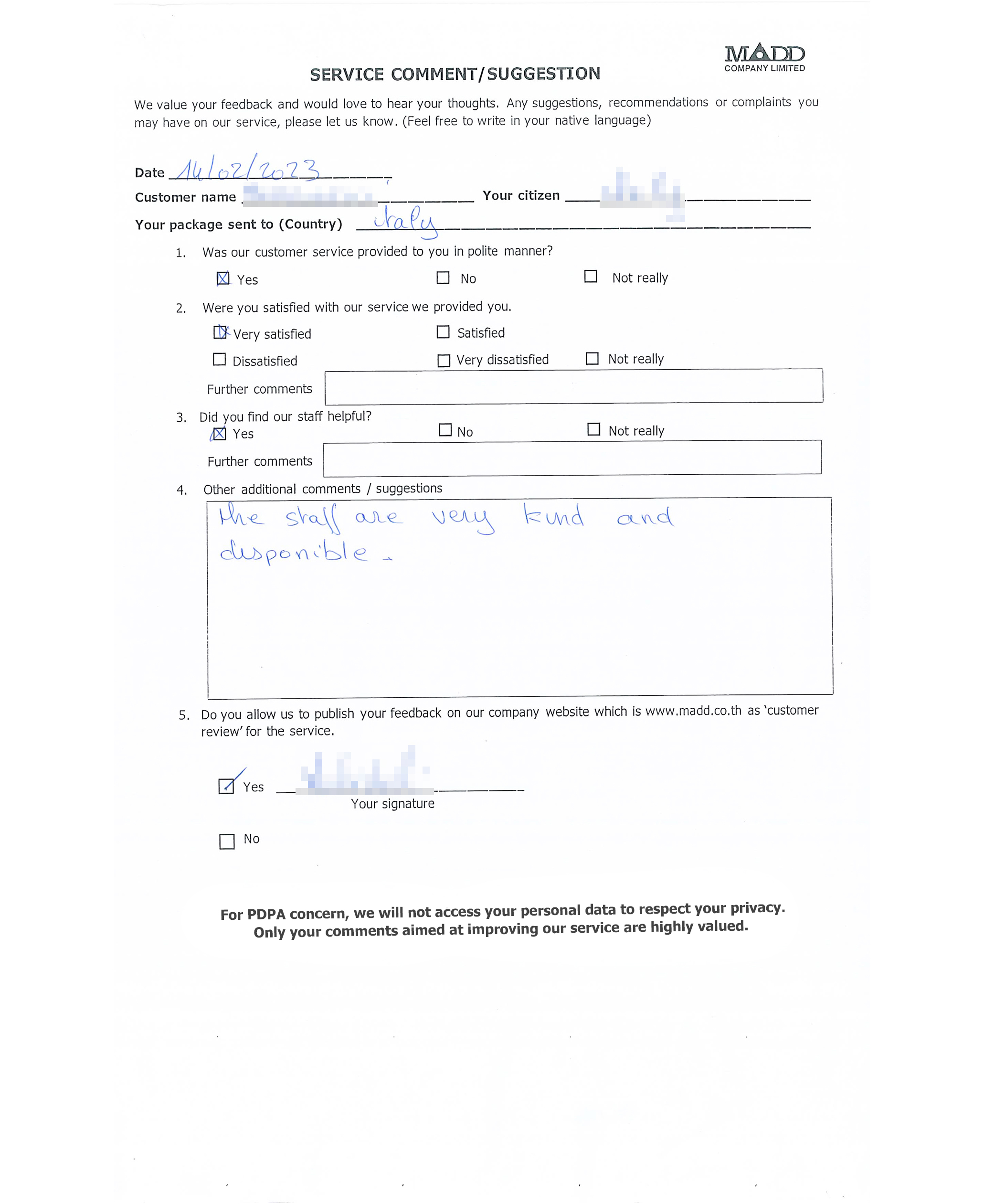
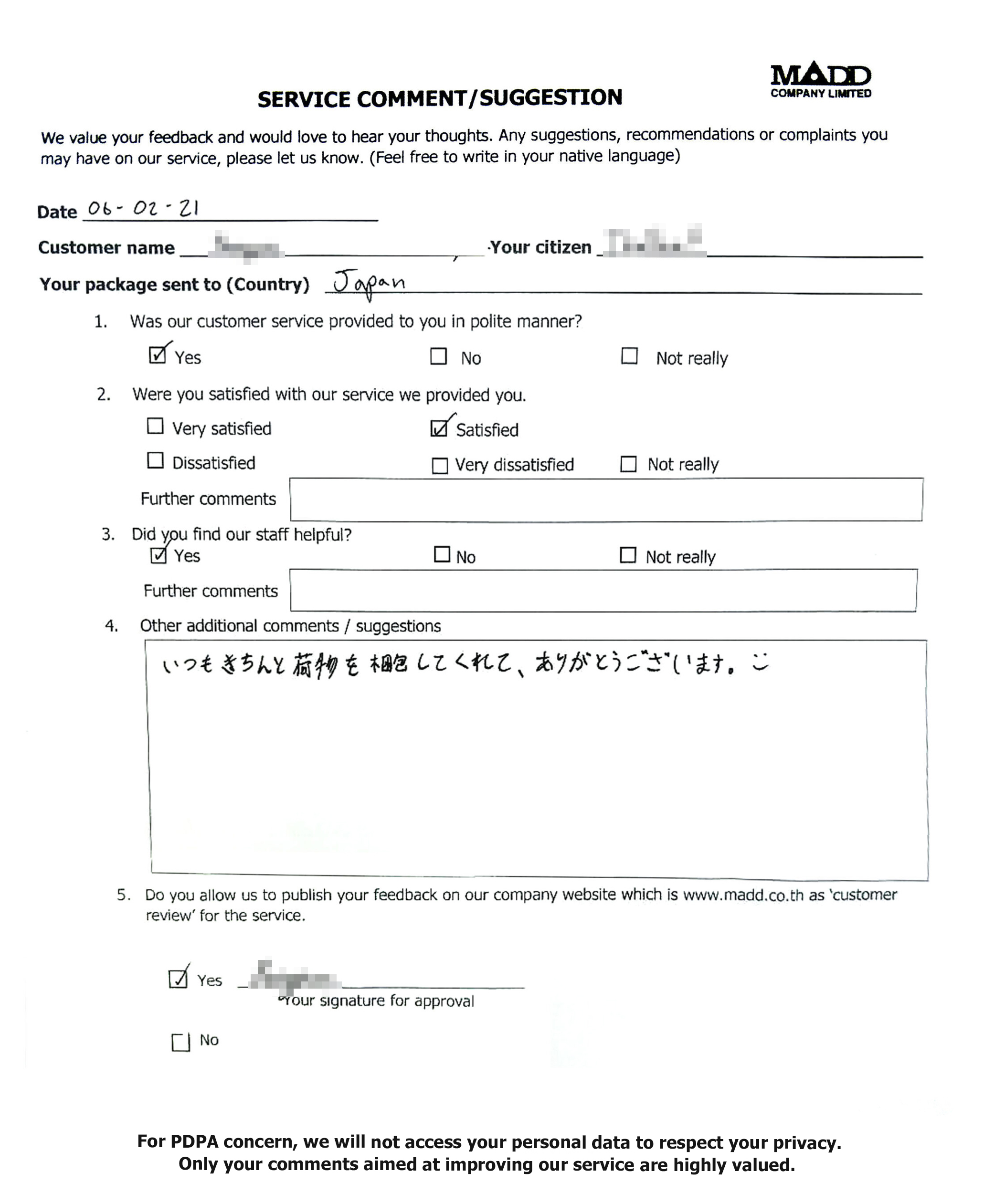
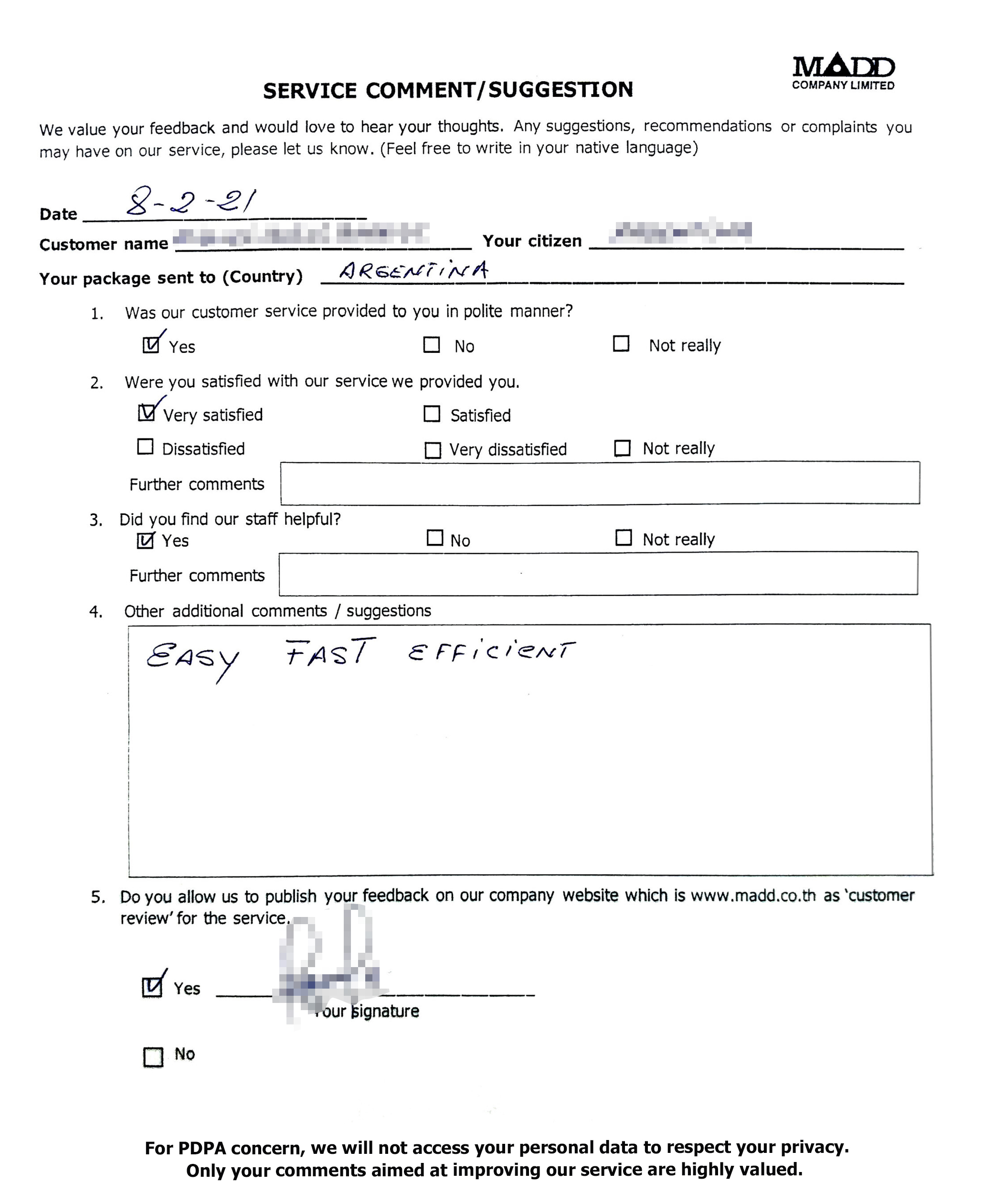
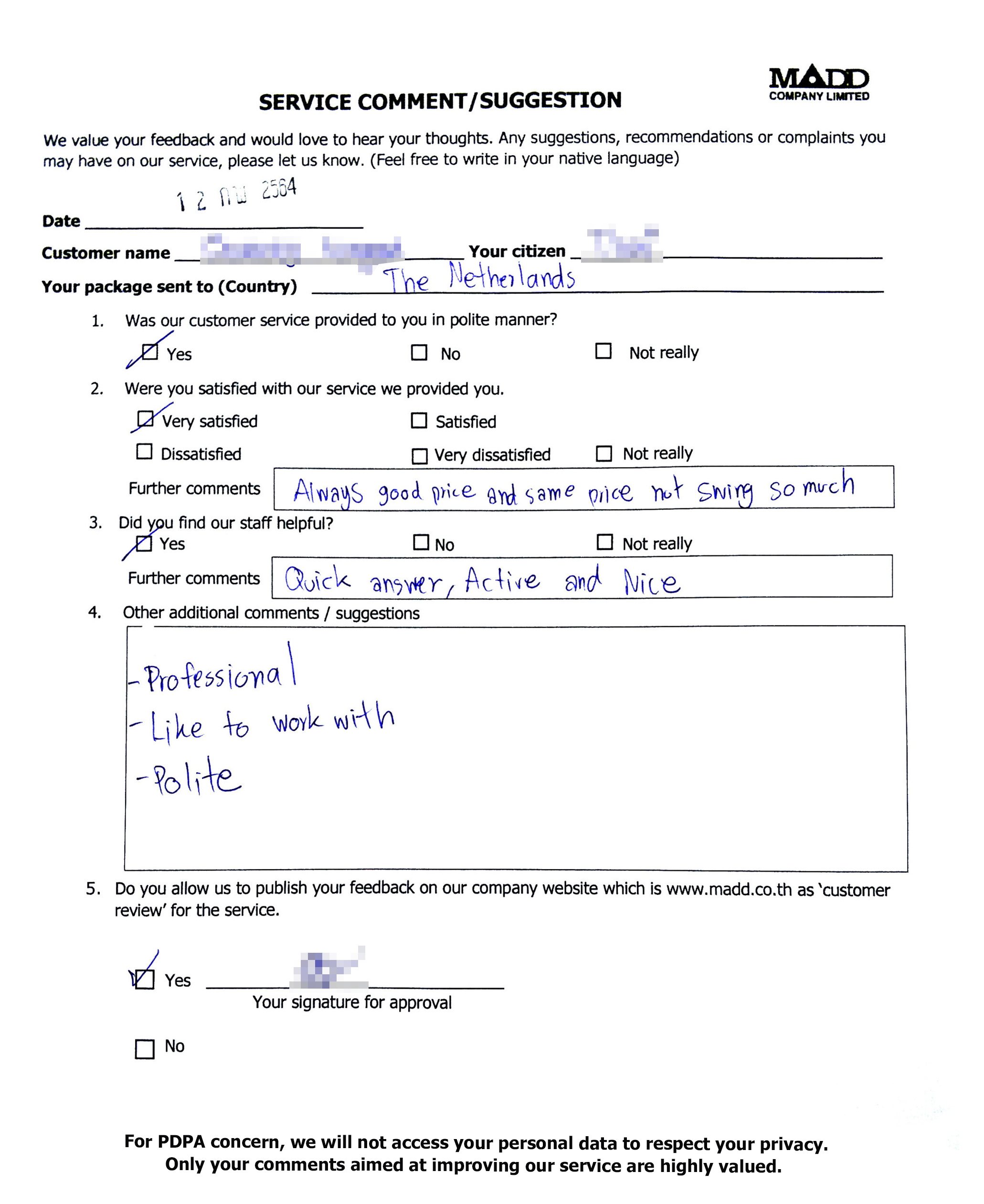
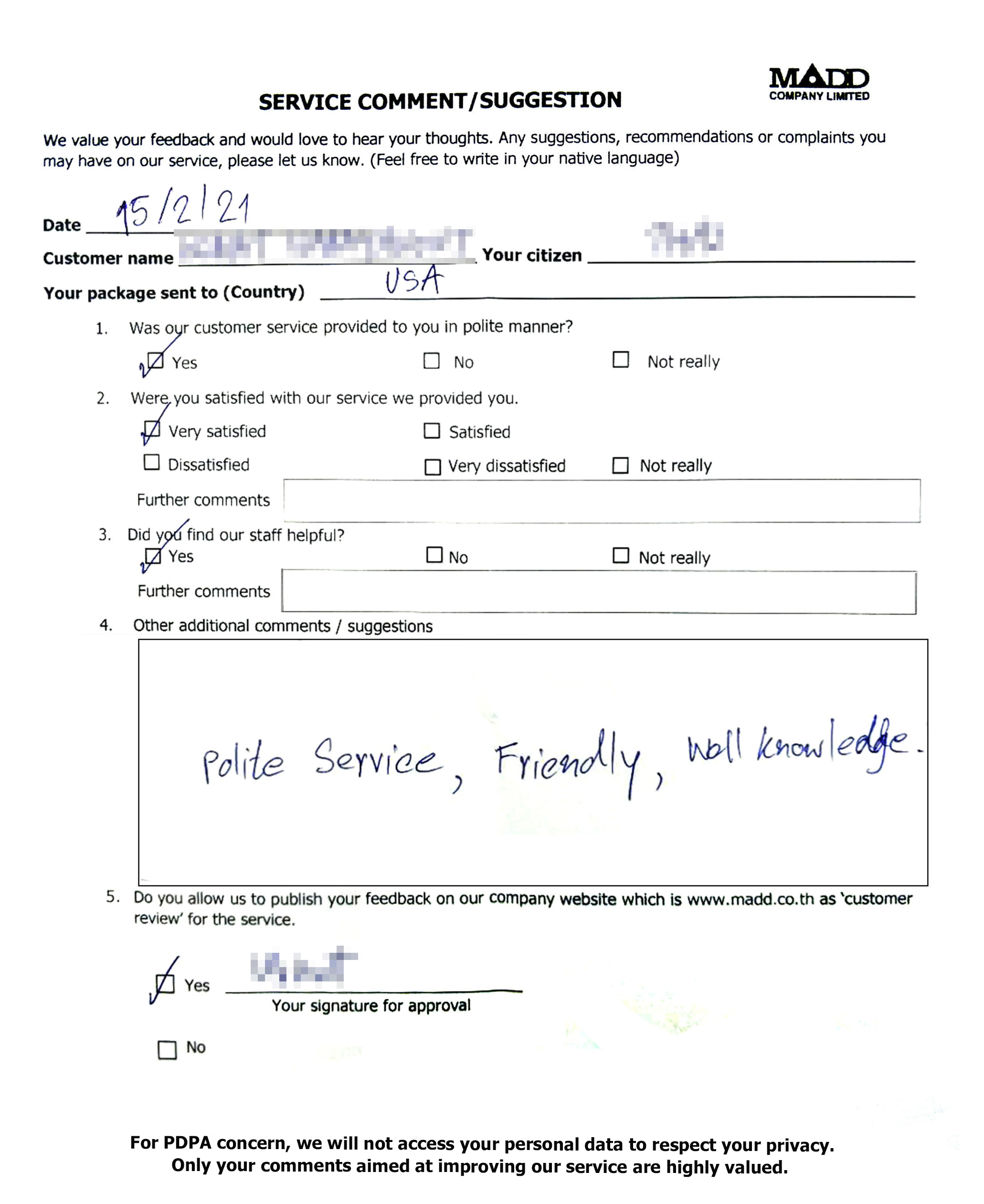
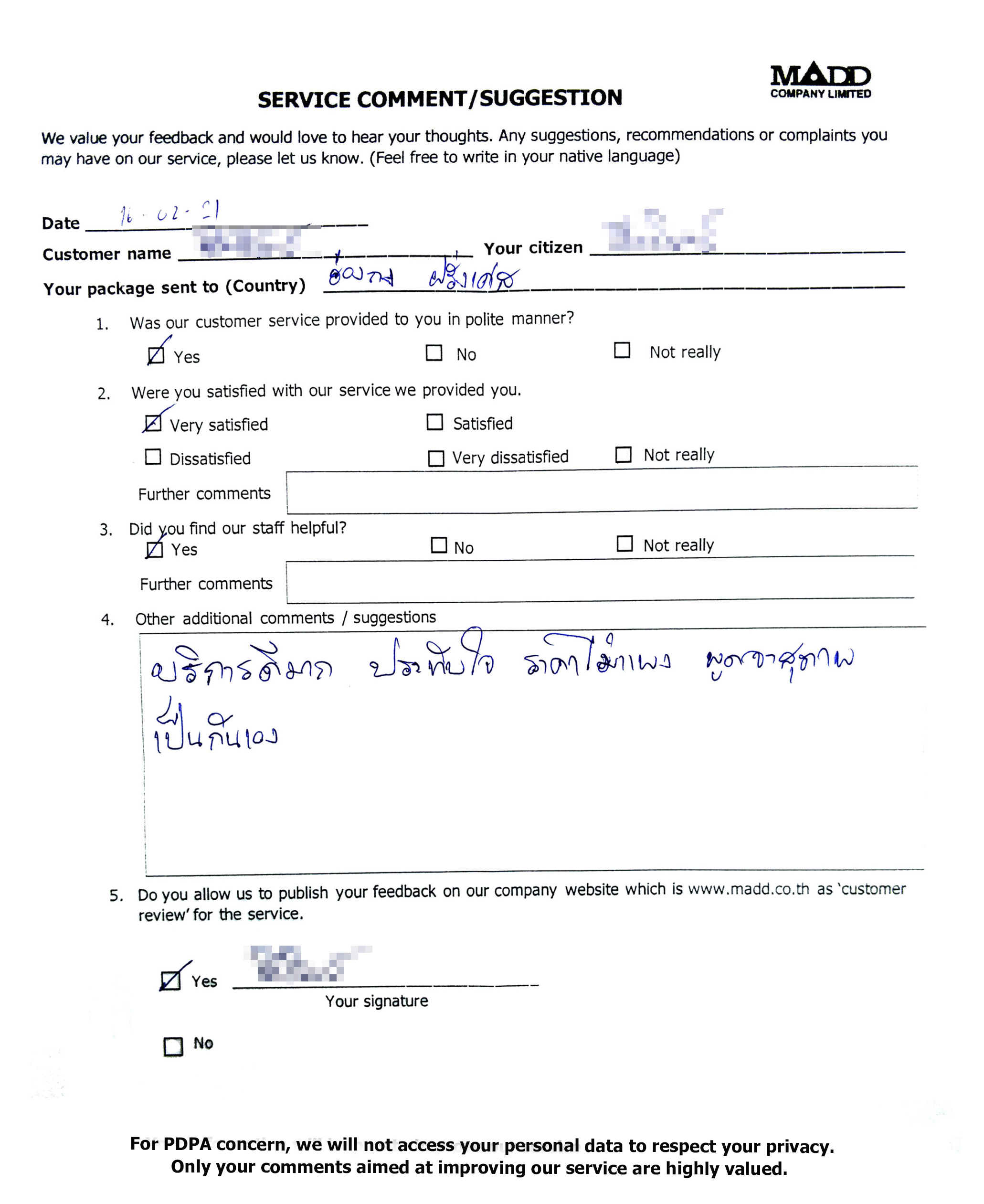
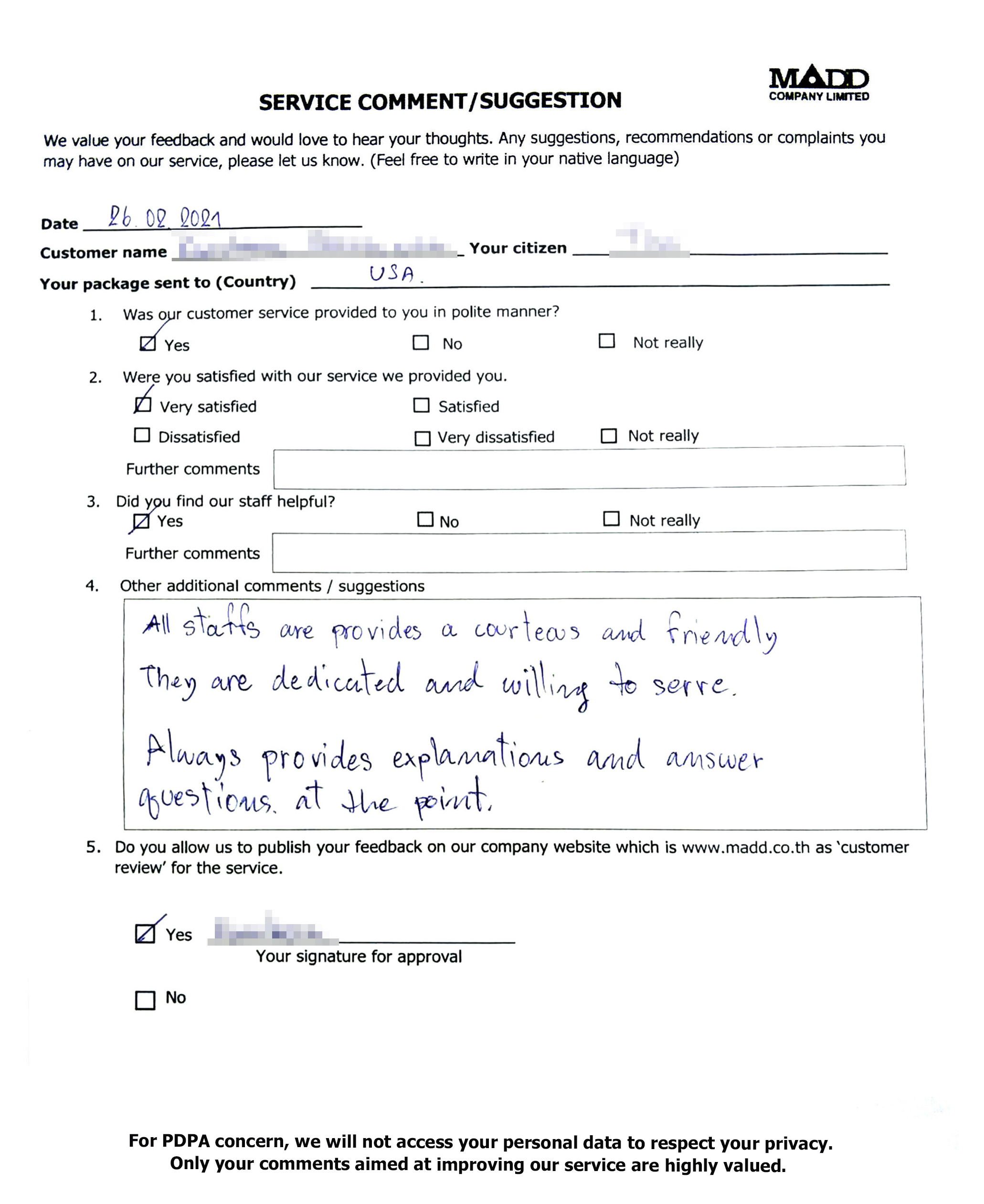
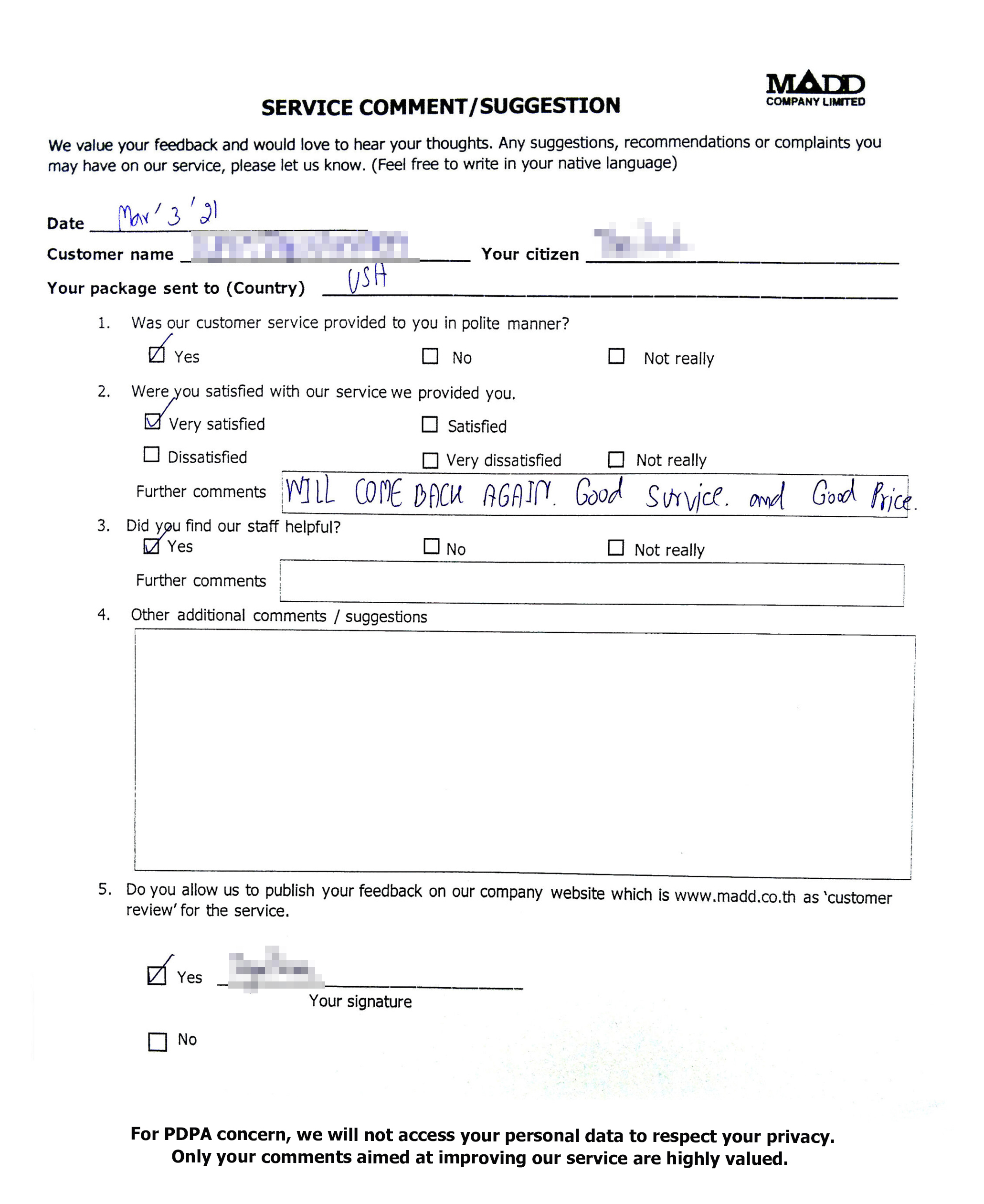
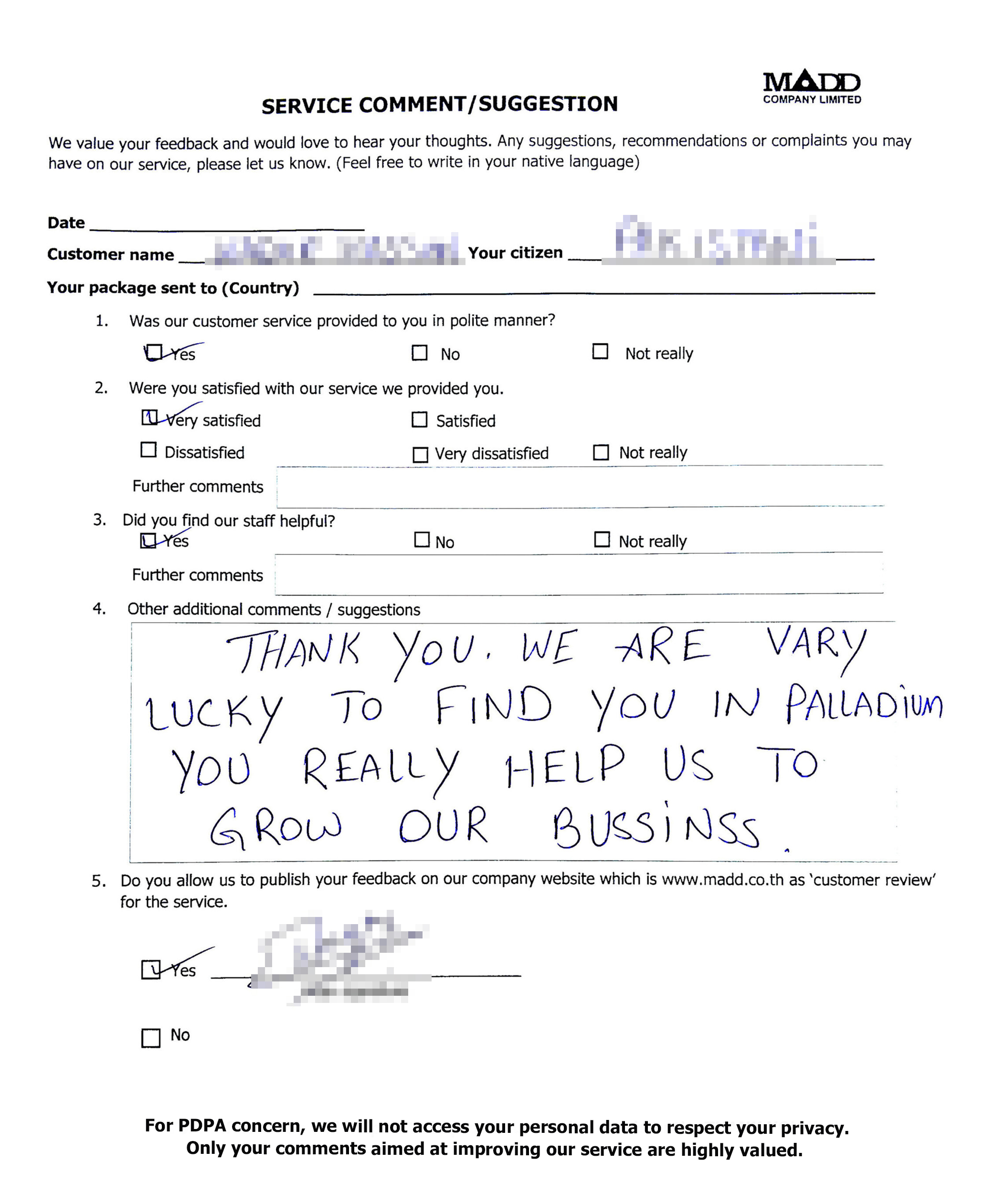
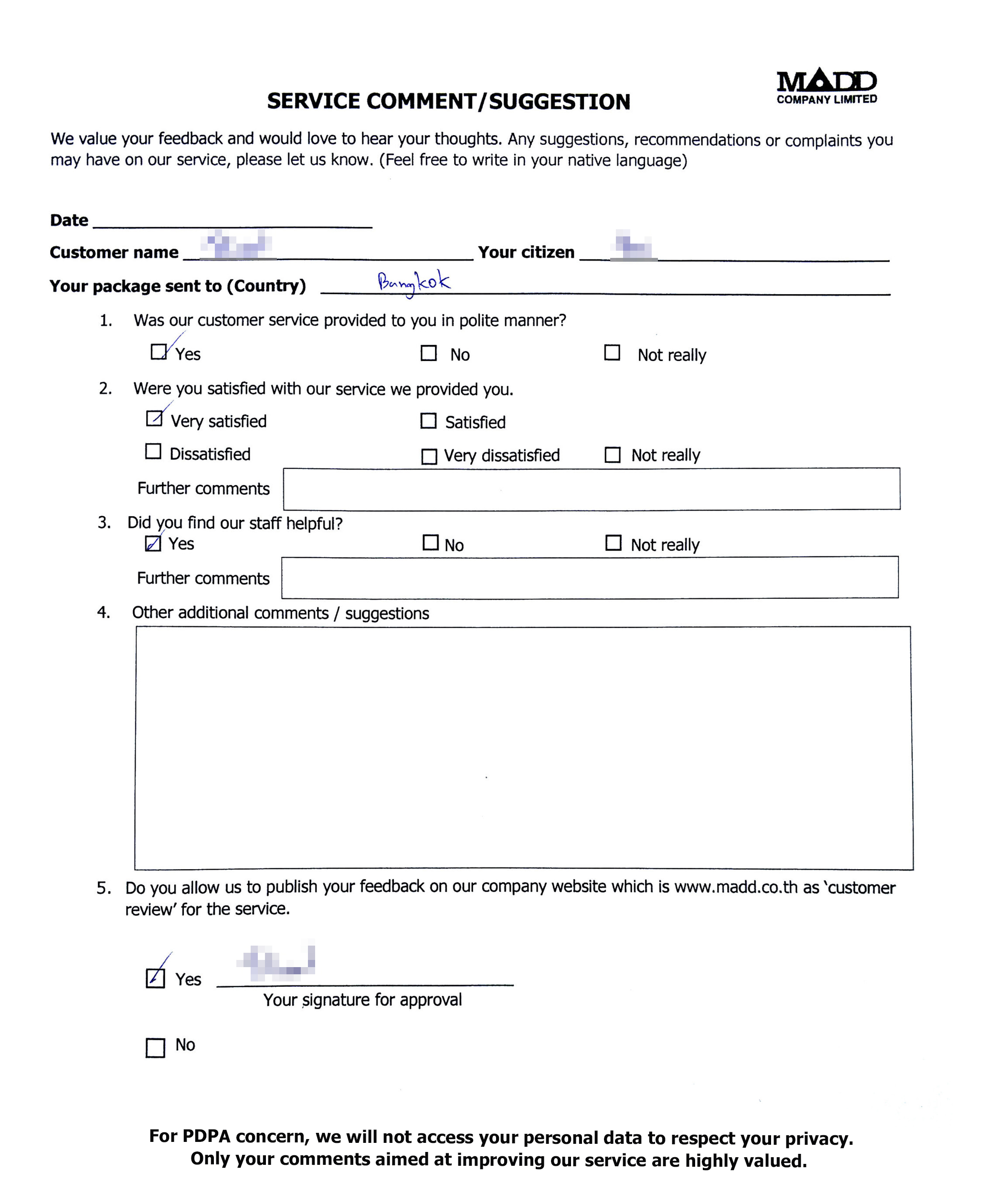
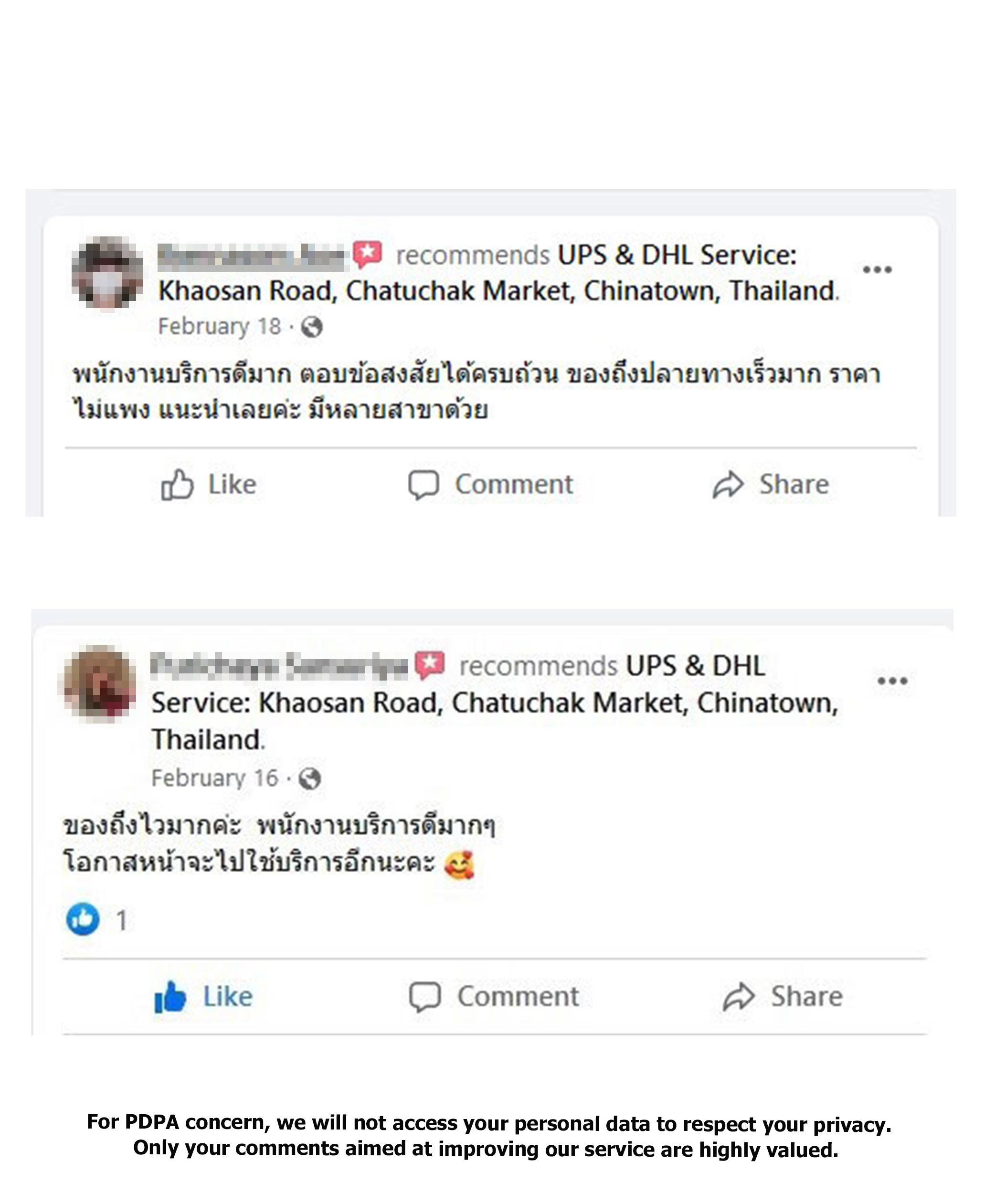
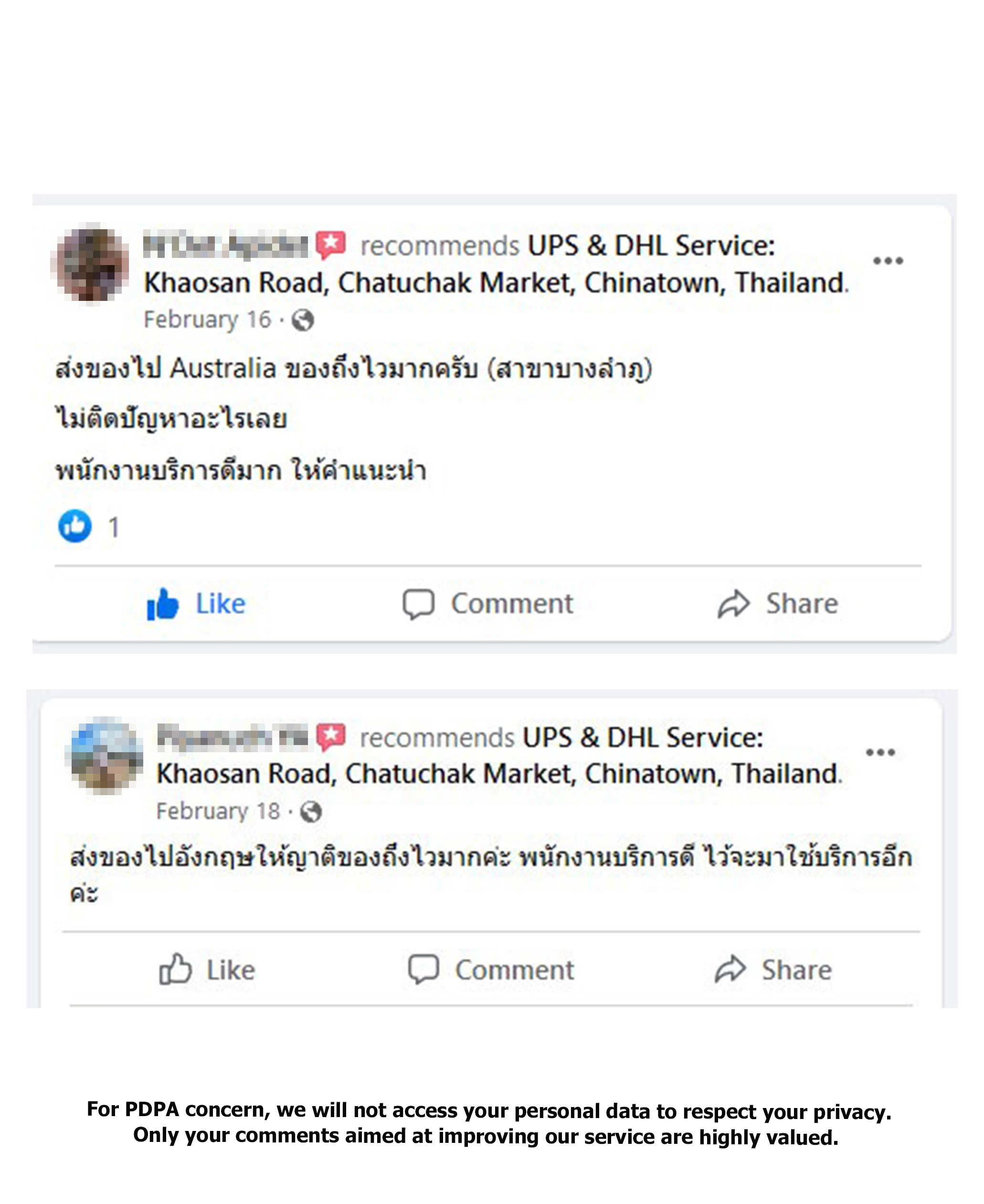
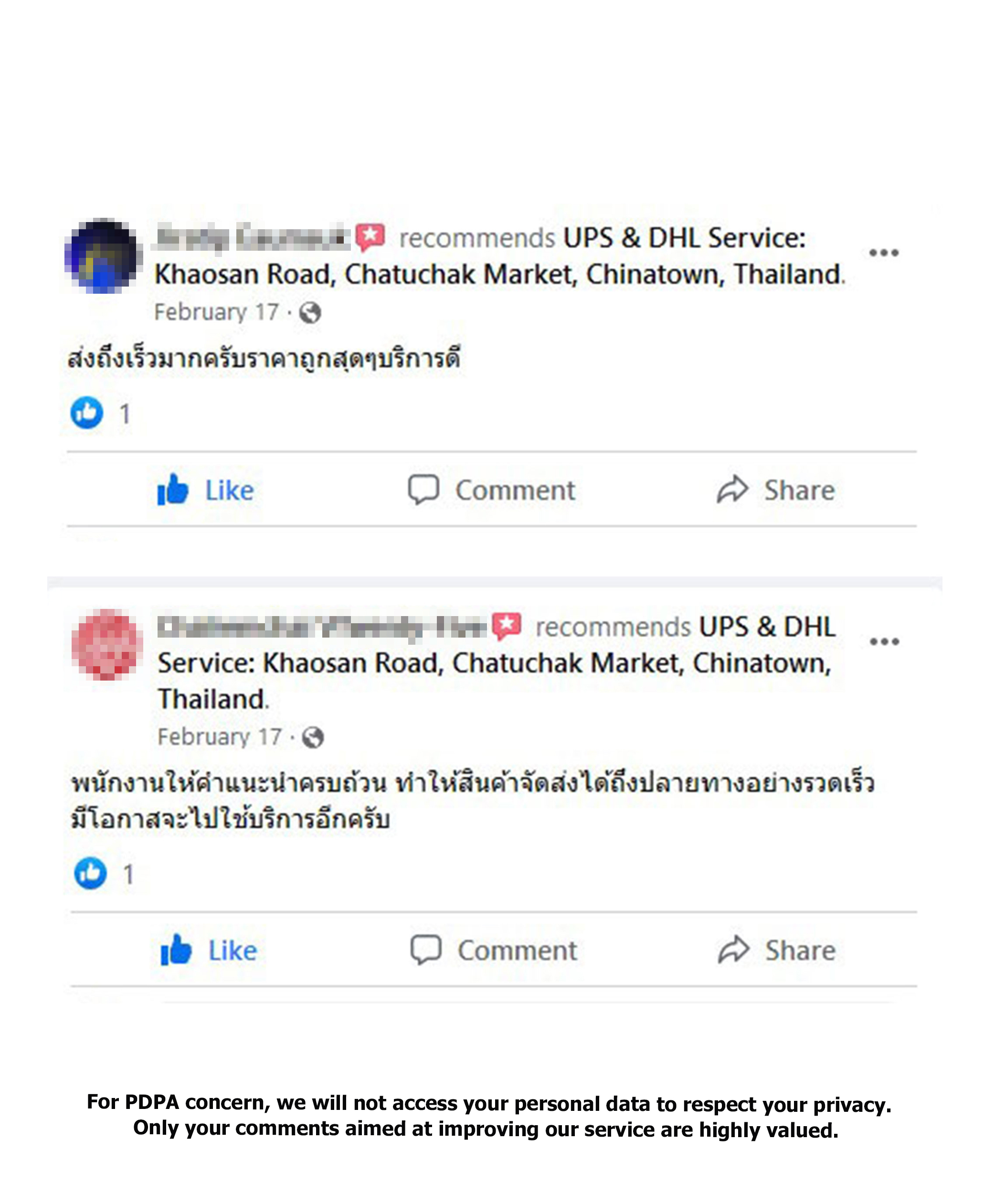
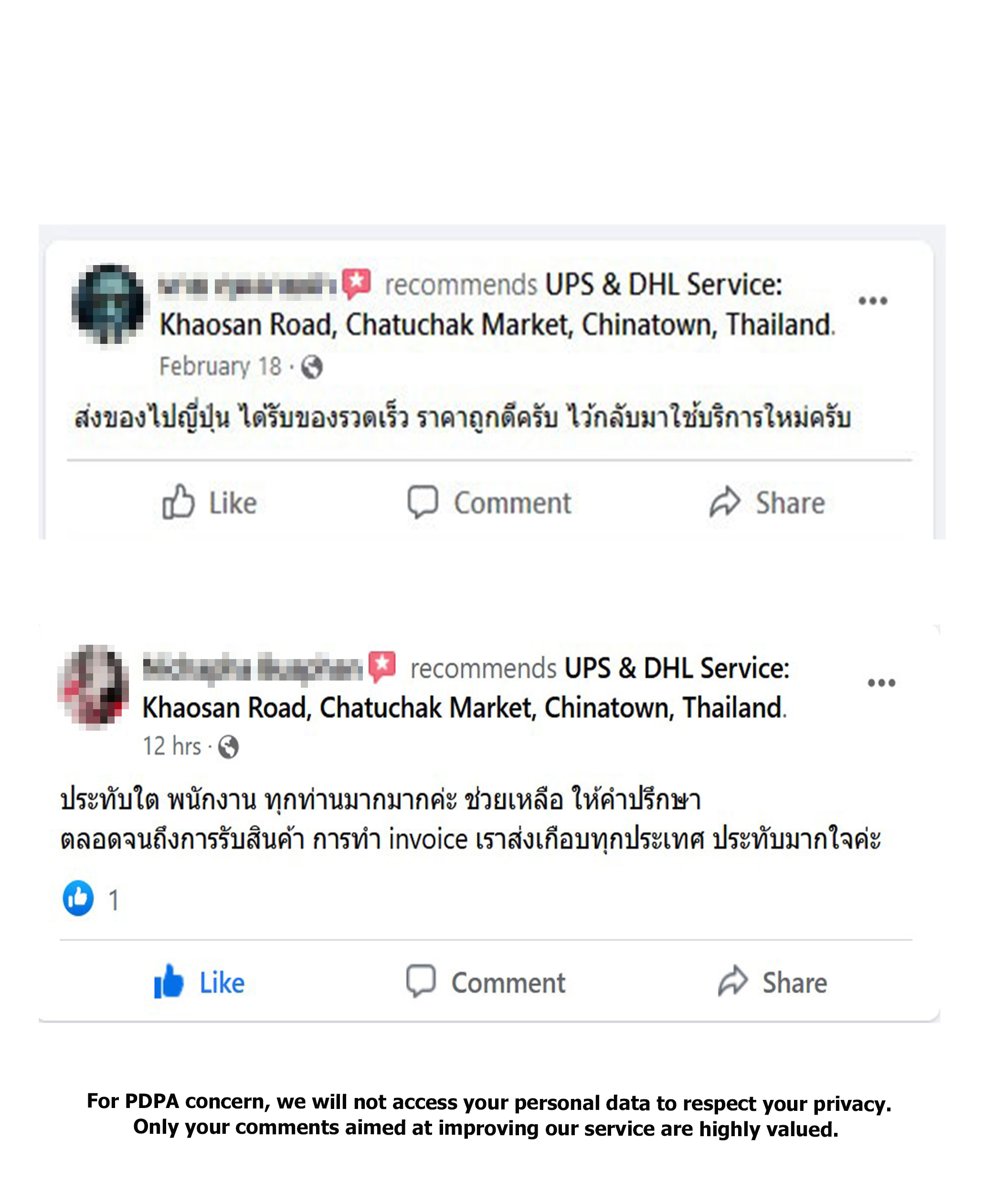
Customer Review

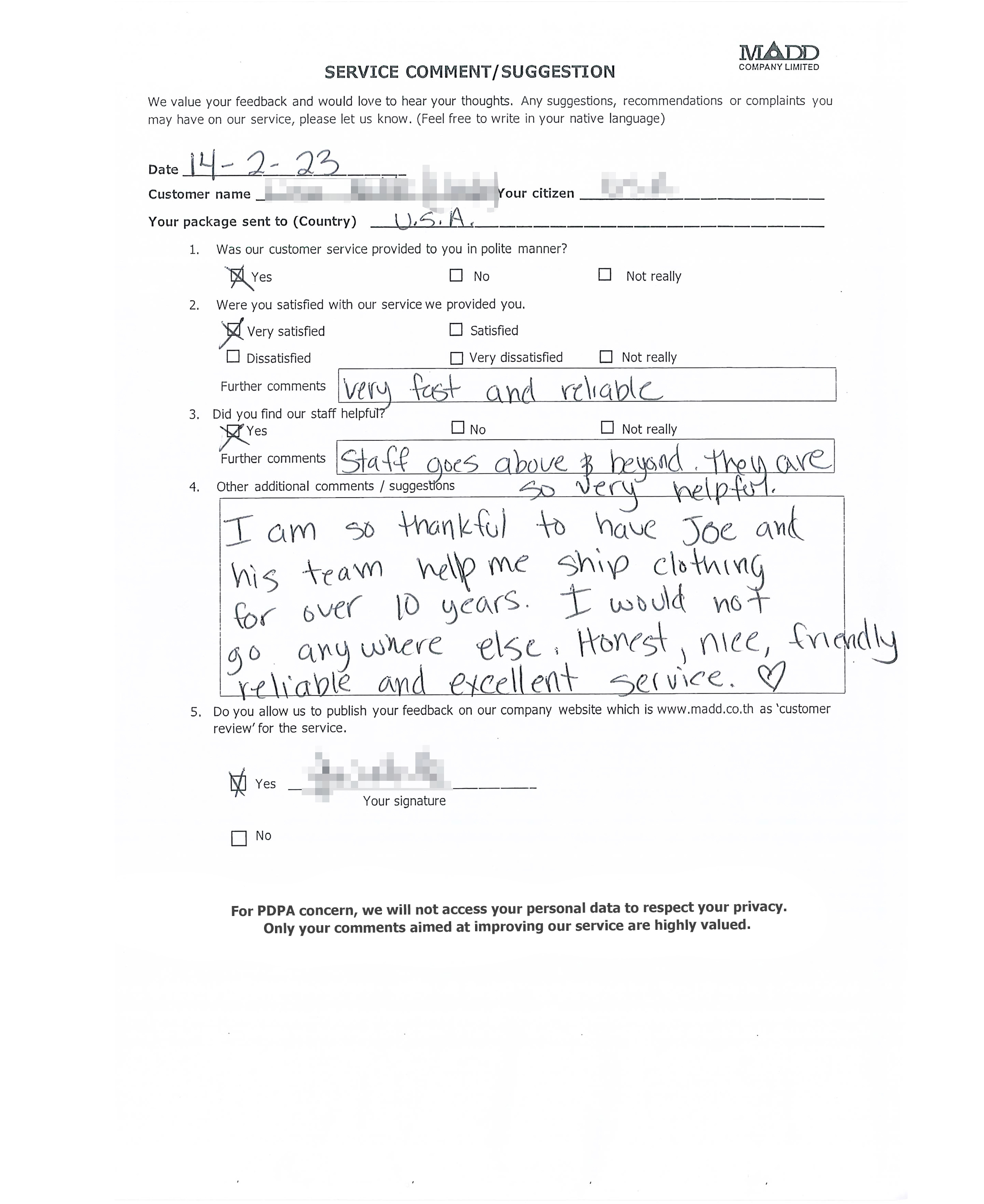
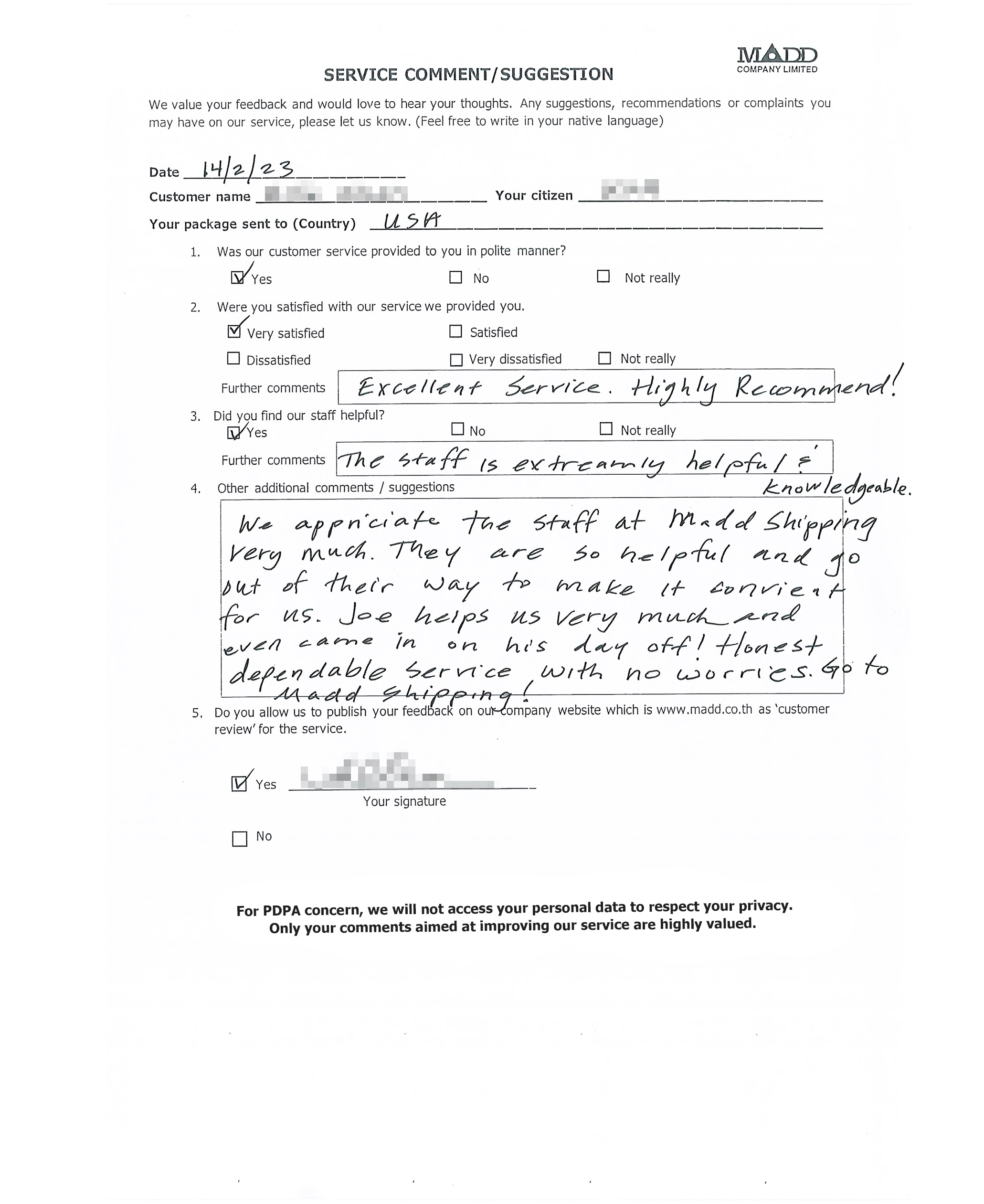
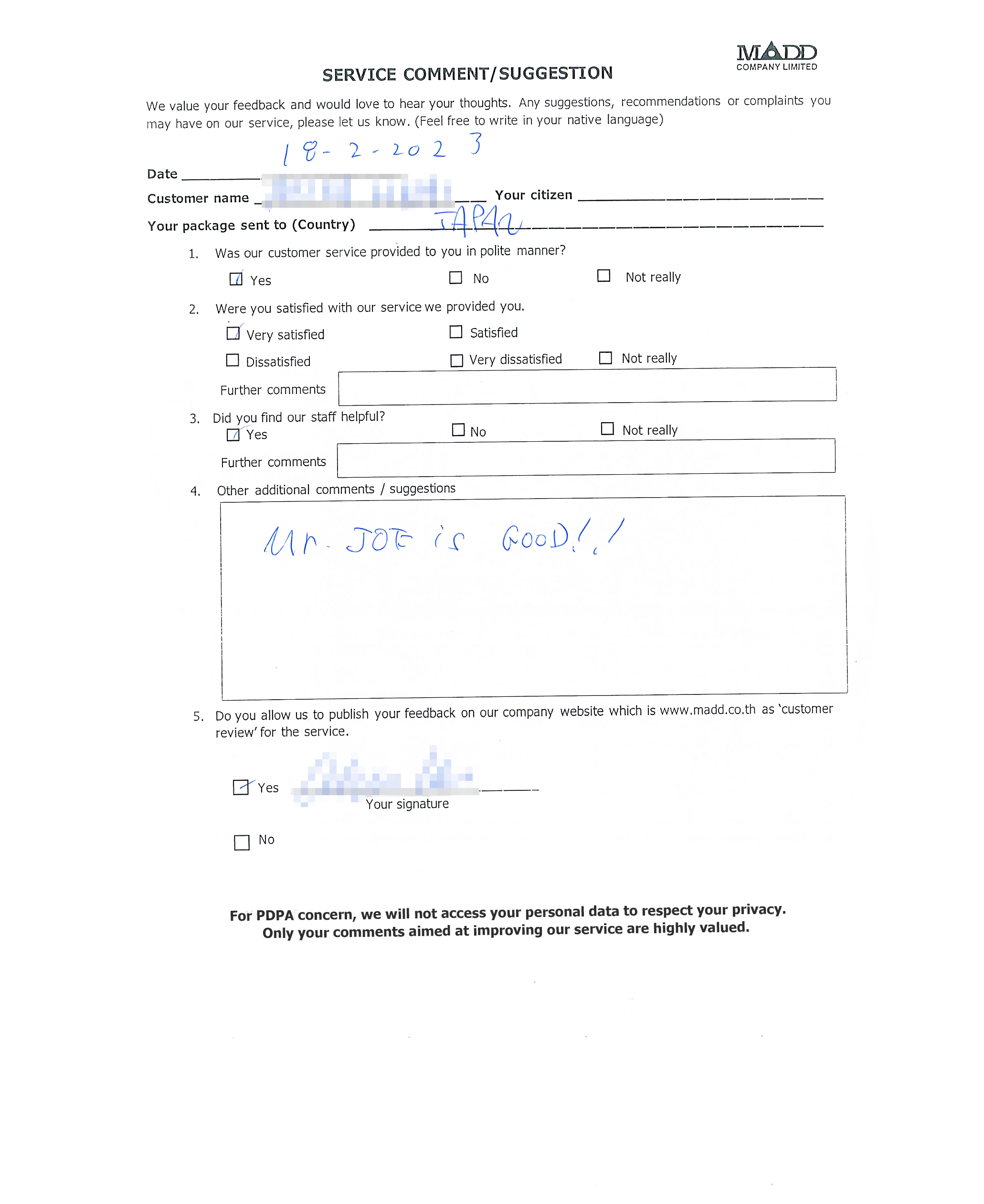
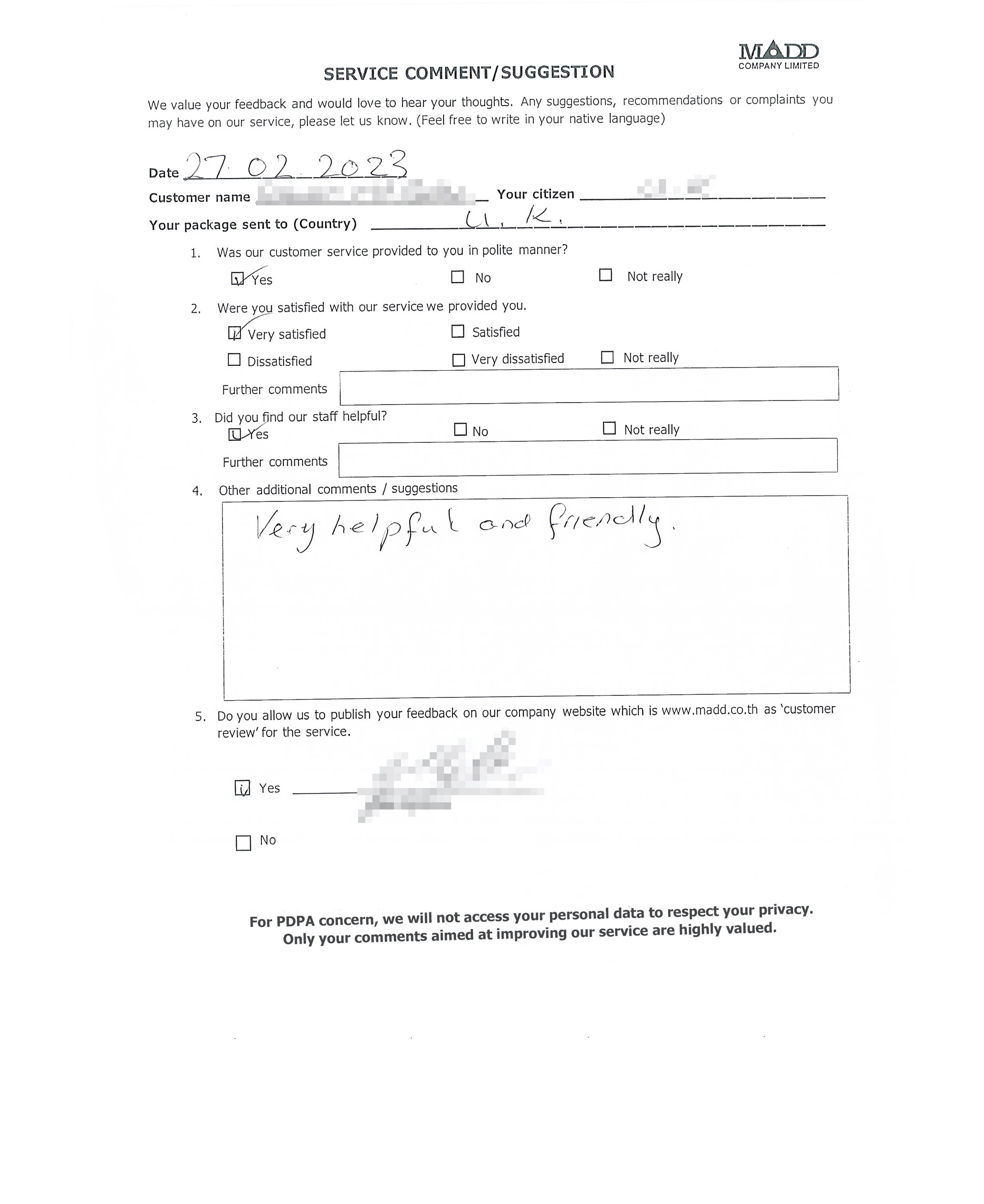
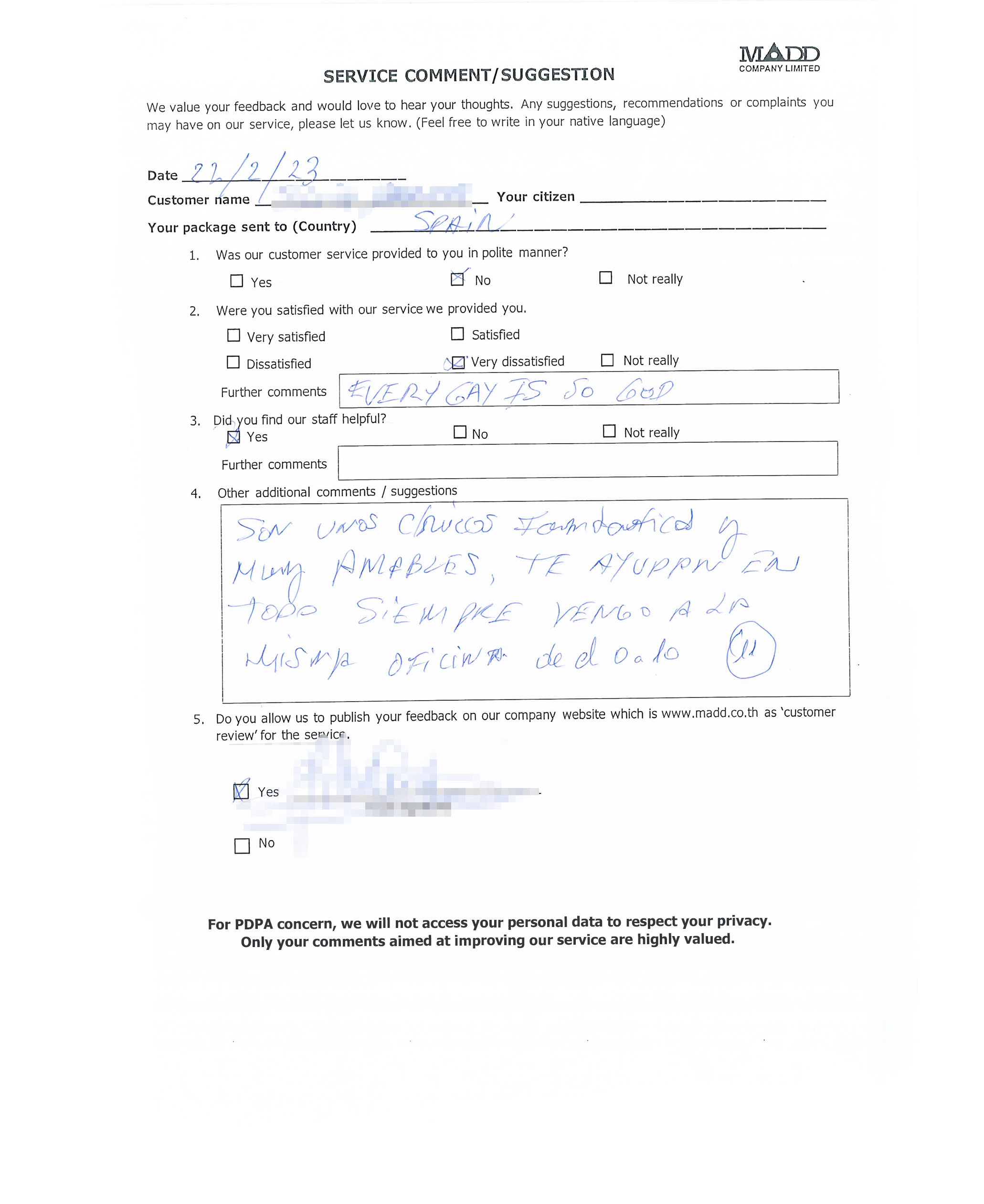
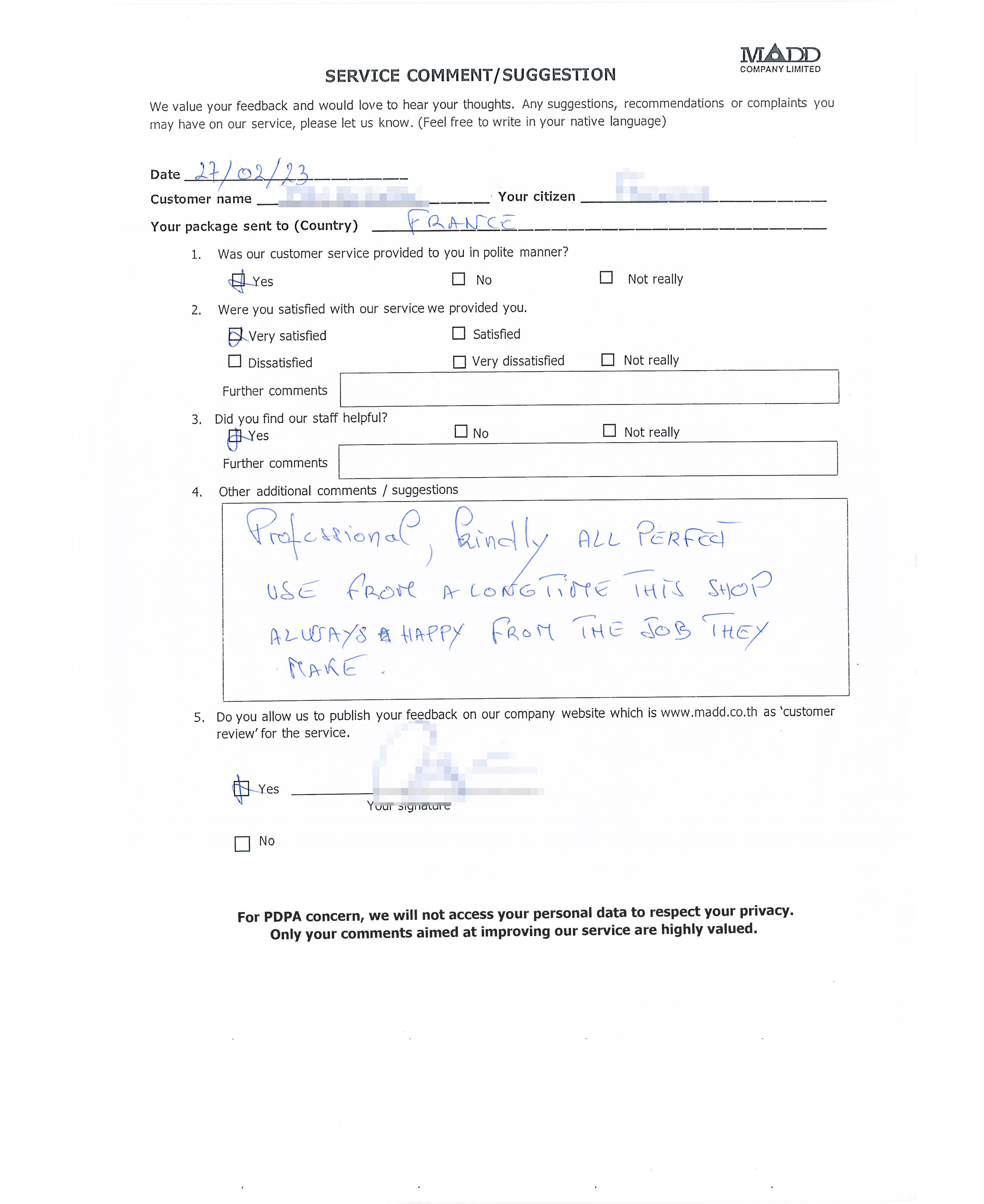
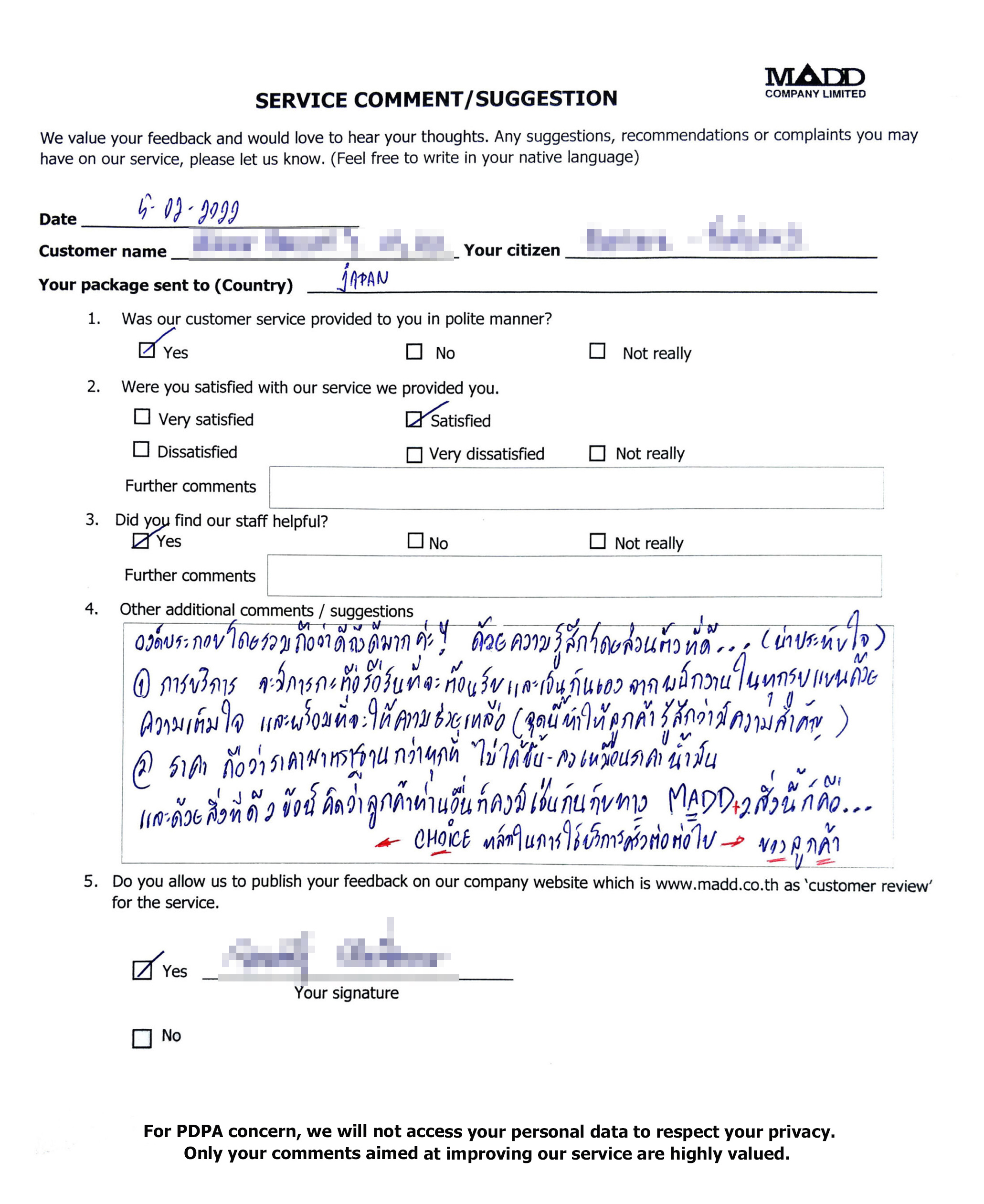

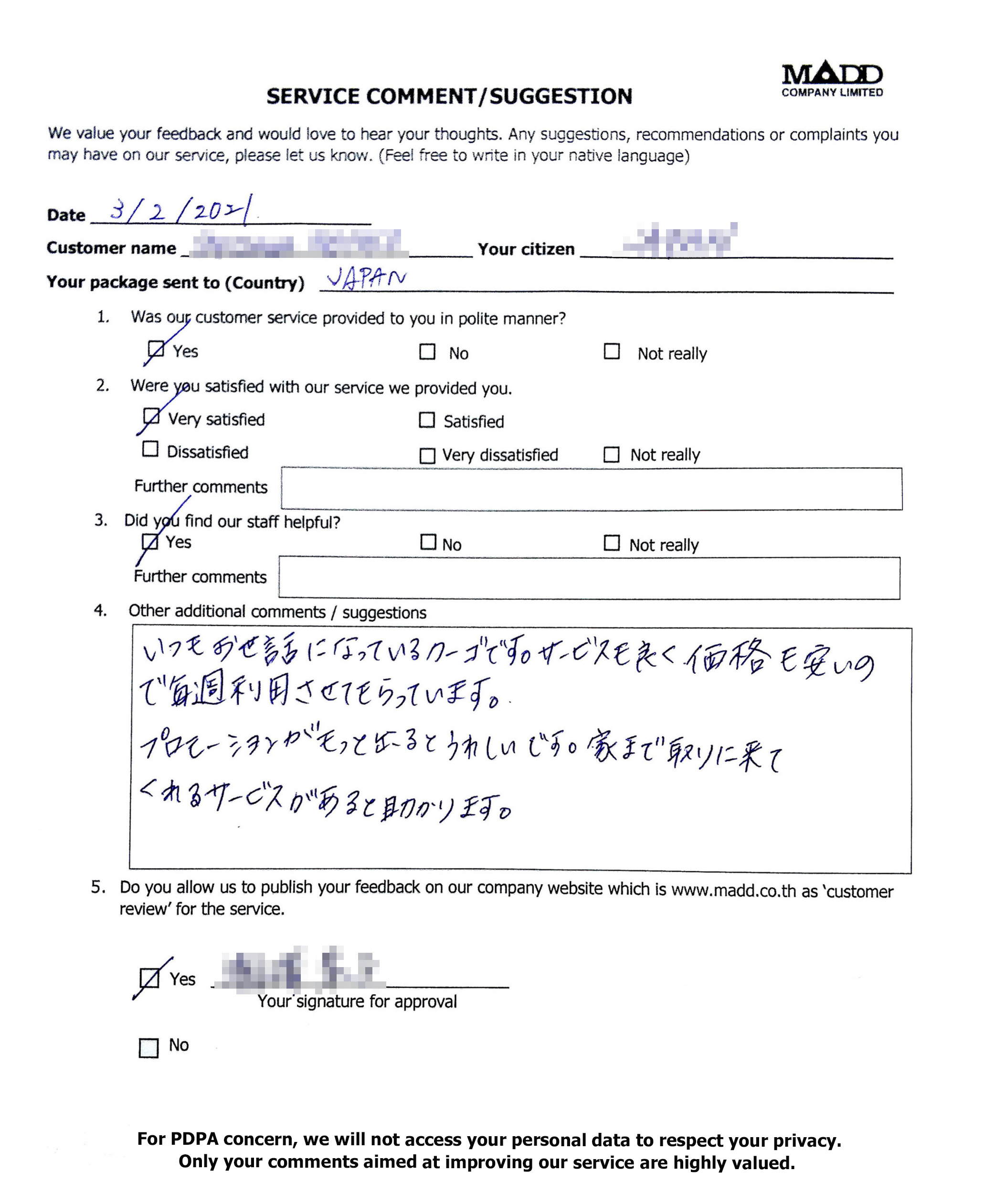
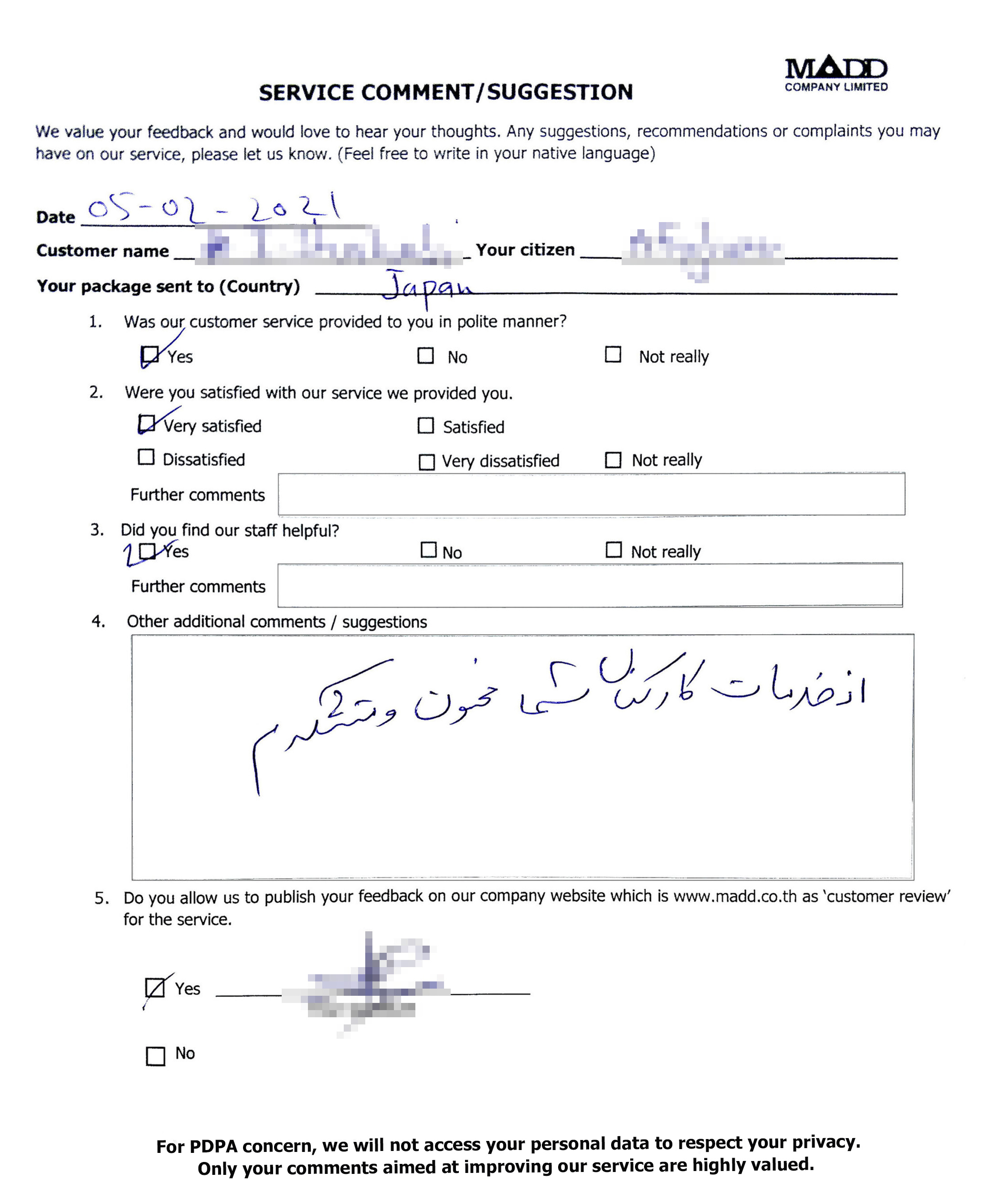
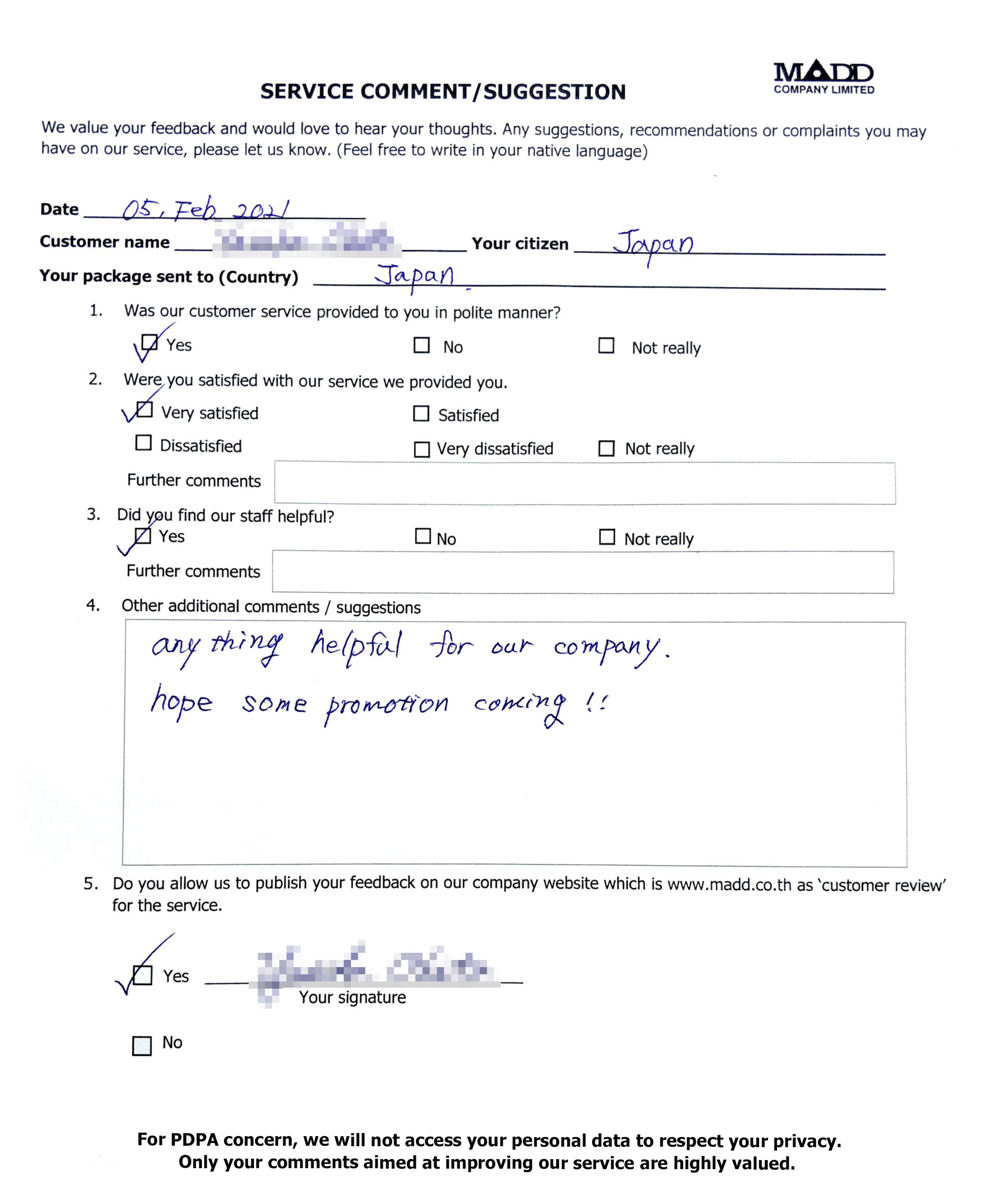




Strategic Partnerships

Shipping FAQ
What Is an International Courier Service?
An international courier service is an express shipping solution that delivers parcels quickly and securely from Thailand to worldwide destinations through global carriers such as UPS and DHL.
This service uses air transportation (Air Express) to ensure fast delivery times, with full tracking visibility at every step from origin to destination.
It is ideal for:
• Small to medium-sized parcels
• Lightweight shipments
• Small quantities
• Urgent international deliveries
Suitable for shipping:
• Personal belongings
• Important documents
• Gifts and souvenirs
• E-commerce products
• Online store orders
Every shipment can be tracked in real time, allowing both sender and recipient to monitor delivery progress until the parcel safely arrives at its destination.
Ship with us, Membership required?
You do not need to apply for membership to use our service.
Individual customers can ship immediately by presenting a valid identification document:
-
- National ID card
- Passport Our
experienced team will assist you by:
-
- Verifying shipment details (item type, quantity, and weight)
- Checking shipping eligibility according to international regulations
- Preparing the Air Waybill
- Professionally packing your items according to international courier standards
- Advising on accurate product declaration to prevent customs delays
Once completed, your parcel will be dispatched through the global logistics networks of UPS or DHL and can be tracked throughout the entire delivery process.
We make international shipping simple, secure, and stress-free.
What Information Is Required for International Shipping?
To ensure smooth customs clearance and fast international delivery, accurate and complete information is essential.
Required Sender Identification
-
- National ID card or Passport
Required Sender & Recipient Details
-
- Full name (First and Last Name)
- Complete address in English
- Postal code (extremely important for delivery accuracy)
- Contact phone number for both sender and recipient
Providing correct details helps:
-
- Prevent customs clearance issues
- Avoid shipment returns
- Reduce delivery delays
- Ensure smooth processing within UPS and DHL systems
Accurate documentation is one of the most important factors in successful international shipping.
How UPS & DHL Calculate International Shipping?
When shipping parcels internationally, the chargeable weight may be different from the weight shown on a scale. UPS and DHL Express consider both the parcel’s actual weight and its dimensional weight, which reflects the space the parcel occupies during transportation.
Understanding these two measurements can help you estimate shipping costs more accurately before sending your parcel from Thailand.
1. Actual Weight
Actual weight is the physical weight of a parcel measured on a scale after it has been packed, including its packaging materials.
The weight used to calculate shipping charges may need to be rounded according to the selected shipping service’s rules.
2. Dimensional Weight
Dimensional weight, also called volumetric weight, reflects the amount of space a parcel occupies. A large, lightweight parcel may have a higher dimensional weight than its actual weight.
For eligible international parcel services, UPS and DHL Express use the following formula when measurements are in centimetres:
Dimensional Weight (kg) = Length × Width × Height ÷ 5,000
Measure the outside dimensions of the fully packed parcel, including its outermost points. Round each dimension up to the next whole centimeter in accordance to the carrier’s measurement guidelines.
Example:
A parcel measures 50 × 40 × 30 cm.
50 × 40 × 30 ÷ 5,000 = 12 kg dimensional weight
If the actual weight is 8 kg, the dimensional weight is higher than the actual weight.
3. How UPS Determines Billable Weight
UPS compares the parcel’s actual weight with its dimensional weight. For eligible parcel shipments, the greater of the two is generally used as the billable weight.
For the applicable rules, refer to the current UPS Thailand shipping guidance and Rate and Service Guide.
*Reference: UPS Thailand — Shipping Dimensions and Weight
https://www.ups.com/th/th/support/shipping-support/shipping-dimensions-weight
4. How DHL Express Determines Chargeable Weight
DHL Express also compares actual weight with dimensional weight and generally uses the higher value to determine chargeable weight.
For international shipments using centimetres and kilograms, DHL Express publishes a dimensional-weight divisor of 5,000. The final chargeable weight and applicable rate depend on the shipment details and the relevant DHL Express service terms.*Reference: DHL Express — About Weight https://dct.dhl.com/help
5. Why Actual and Dimensional Weight Both Matter
Consider a parcel with these measurements:
- Dimensions: 50 × 40 × 30 cm
- Actual weight: 8 kg
- Dimensional weight: 12 kg
Because the dimensional weight is higher than the actual weight, the billable or chargeable weight would generally be based on 12 kg, subject to the carrier’s applicable service rules.
For a smaller, denser parcel whose actual weight exceeds its dimensional weight, the actual weight would generally determine the billable or chargeable weight.
6. How to Prepare Before Shipping
To obtain a more accurate shipping estimate:
- Weight the parcel after packing.
- Measure its outside length, width and height.
- Provide accurate shipment details when requesting a quote.
- Confirm the selected service and destination.
- Check the carrier’s current terms for applicable rounding rules, weight limits and additional charges.
The final charge may change if the carrier’s measurements differ from the information supplied when the shipment was booked.
What Information Do You Need Before Checking Shipping Rates?
Before shipping a parcel internationally from Thailand, prepare its packed dimensions, actual weight, destination country and preferred shipping service. These details help you check the applicable shipping options and rates.
If you need help checking shipping options for your parcel, you can contact MADD for further information. The final shipping charge depends on the parcel details, destination and applicable service terms.
Note: Dimensional-weight formulas and rounding rules may vary depending on the carrier, service and shipment conditions. The information above is a general guide, not a guarantee of the final shipping charge.
Last updated: 16 October 2026
Can Counterfeit or Copyrighted Items Ship Internationally?
Counterfeit goods or products that infringe intellectual property rights are generally prohibited from international shipping and may be refused by carriers or authorities
What Happens If Counterfeit Items Are Detected?
If imitation or copyright-infringing products are found during inspection:
-
- The carrier has the right to refuse shipment
- The parcel may be seized
- Legal action may be taken under customs laws of the origin or destination country
- Financial penalties may apply
International shipping regulations strictly prohibit the export of counterfeit branded products, replica goods, or items that violate trademark or copyright laws.
Important Recommendation
To avoid legal risks, delays, or confiscation, we strongly recommend shipping:
-
- Genuine products only
- Non-restricted goods
- Items that comply with intellectual property regulations
Shipping authentic and compliant products ensures smooth customs clearance and secure international delivery.
Will Gift-Wrapped Packages Be Opened for Inspection?
Sending a gift overseas is a thoughtful way to celebrate a birthday, holiday, or special occasion. But if you wrap a gift before shipping it, could the package be opened during transit?
The answer depends on the shipment and the checks required. Customs authorities may inspect goods, and shipping carriers may conduct security screening or follow other handling procedures. Gift wrapping does not exempt a parcel from customs requirements or applicable security checks.
Here is what you should know before sending a gift internationally from Thailand.
1. Can Customs Open a Gift-Wrapped Parcel?
Yes. Customs authorities in the country of origin or destination may inspect an international shipment when necessary for customs, security, or regulatory purposes.
An inspection does not necessarily mean that the sender has done anything wrong. Authorities may need to examine the contents, verify the declared value, or check compliance with import regulations.
The inspection method depends on the circumstances. Some parcels may need to be opened for examination, but this does not mean that every parcel will be opened or that all gift wrapping will be removed.
*Reference: DHL Express Thailand — Customs Clearance
2. Does Gift Wrapping Affect Customs Clearance?
Gift wrapping does not remove the requirement to provide accurate shipment information.
Customs declarations must describe the actual goods and their value. Depending on the destination country and the items being sent, additional documents or permits may also be required.
Simply writing “gift” may not provide enough information for customs purposes. For example, if a parcel contains a cotton T-shirt and a ceramic mug, the declaration should clearly identify both items and state their purpose as a gift where the form requests this information.
Tip: Complete the required customs information before dispatch and follow the carrier’s packaging instructions.
*References:
UPS Thailand — How to Ship Internationally
DHL Express Thailand — Customs Clearance Documents and Information
3. Should You Wrap the Gift Before Shipping It?
If you want the recipient to receive a beautifully wrapped gift, consider wrapping the item first and then placing it inside a suitable outer shipping box.
This helps protect the presentation during transportation. However, it cannot guarantee that the inner wrapping will remain untouched if an inspection or another required procedure takes place.
Use a sturdy outer box, adequate cushioning, and secure packaging suitable for international transportation. Avoid relying on decorative gift wrapping alone to protect the contents.
4. What If the Gift Is Fragile or Valuable?
Fragile gifts need appropriate protective packaging, regardless of the occasion.
Use suitable cushioning and a sturdy outer box, and check whether the item is accepted by the selected carrier and permitted in the destination country.
For valuable items, review the carrier’s applicable terms and any available options for protection against loss or damage before shipping. Do not assume that decorative gift packaging provides sufficient protection during transportation.
*Reference: UPS Thailand — How to Ship Internationally
5. What Should You Check Before Sending a Gift Overseas?
Before shipping a gift from Thailand, make sure you:
- Describe the contents accurately in the required documents.
- Declare the value truthfully.
- Identify the shipment as a gift where the customs declaration asks for its purpose.
- Check the destination country’s import restrictions.
- Confirm whether permits or additional documents are required.
- Use packaging that protects the contents during transportation.
- Check whether import duties or taxes may apply.
Import rules and gift exemptions vary by country. A gift should not automatically be assumed to be tax-free or exempt from customs inspection.
For destination-specific requirements, consult the relevant customs authority or shipping carrier.
*Reference: UPS — Country-Specific Shipping Regulations
If you are planning to send a gift internationally from Thailand, check the destination country’s requirements, the information that must be declared to customs, and the applicable packaging requirements before shipping. If you need information about parcel preparation or shipping services, you can contact MADD for further assistance.
Customs inspections and import clearance decisions are subject to the requirements of the relevant authorities. No shipping provider can guarantee that a gift-wrapped parcel will never be opened for inspection.
Note: This article provides general information only. Customs requirements, gift exemptions, and carrier procedures vary by destination and shipment. Check the applicable rules before shipping.
Last Updated: 16 October 2026
Why Sometimes Import Taxes Are Higher Than Shipping Costs
When shipping internationally, you may be surprised to find that import duties and taxes cost more than the shipping fee itself. This is because shipping charges and import charges are calculated separately and serve different purposes.
Shipping charges cover the transportation of goods from the sender to the destination. Import charges, on the other hand, are imposed under the destination country’s customs and tax regulations. Depending on the shipment, these charges may include customs duties, import taxes such as VAT or GST, and customs clearance or carrier-related fees.
Unlike shipping fees, which are primarily related to transportation, import charges may depend on the type of goods, their customs value, country of origin, tariff classification, and the regulations of the destination country. As a result, even a relatively small or lightweight parcel may incur import charges that exceed the cost of shipping.
For example, two parcels with similar shipping costs may incur different import charges if they contain different products, have different declared values, or are sent to countries with different customs rules and tax rates.
The customs value may also include certain transportation, insurance, or other costs, depending on the destination country’s valuation rules. In addition, preferential trade agreements or specific exemptions may reduce the charges for eligible shipments, subject to the applicable requirements.
Understanding these factors before shipping can help you estimate the overall cost more realistically and reduce the risk of unexpected charges. However, the final amount depends on the destination country’s regulations and the customs authorities’ assessment.
*Official references:
UPS — Understanding Customs
European Commission — Calculation of Customs Duties
Who Pays Import Duties and Taxes?
Responsibility for import charges depends on the agreed shipping terms, the carrier’s service, and the destination country’s rules.
Under Delivered Duty Paid (DDP) arrangements, the seller or shipper generally takes responsibility for applicable import duties and taxes under the agreed terms. Under arrangements where the recipient pays, the recipient is generally asked to settle the applicable charges before delivery or release of the shipment.
The exact process can vary. If the recipient does not pay, the carrier may seek payment from the shipper under its applicable terms and conditions.
Before shipping, confirm who is responsible for duties, taxes, and any applicable customs clearance or carrier fees.
*Official reference: UPS — Understanding Customs
How to Reduce the Risk of Unexpected Import Charges
Although import charges cannot always be predicted exactly in advance, you can take practical steps to prepare:
- Describe the goods accurately. Provide a clear description of the contents rather than a vague term such as “goods” or “gift.”
- Declare the correct value. Use accurate information and retain supporting purchase or valuation documents when available.
- Provide the correct country of origin. Do not confuse the country of origin with the country from which the parcel is shipped.
- Check destination requirements. Review current customs rules, taxes, restrictions, and any applicable exemptions before sending the parcel.
- Confirm who pays the import charges. Make sure the sender and recipient understand the agreed shipping terms.
- Budget for charges beyond transportation. Depending on the shipment, the total cost may include duties, import taxes, customs clearance charges, or carrier-related fees.
Before You Ship Internationally
Before sending a parcel overseas, check the destination country’s import requirements, prepare accurate shipment details, and inform the recipient about possible duties, taxes, and clearance fees.
For international shipping from Thailand, MADD can provide information about available shipping services and help you prepare your shipment before dispatch.
Import duties, taxes, and customs clearance decisions depend on the applicable regulations and assessment of the relevant authorities. Information provided before shipping cannot guarantee the final charges at destination.
Disclaimer : This article provides general information only and is not a customs, tax, or legal determination. Import duties, taxes, exemptions, and clearance procedures vary by destination, product, shipment type, and applicable regulations. Rules may change, and the final charges are determined under the requirements and assessment of the relevant authorities.
Last Updated: 15 October 2026
Who Pays Import Duties and Taxes?
When shipping parcels internationally, additional charges may apply beyond the shipping cost. These may include customs duties, import taxes, customs clearance fees, and other related charges. Responsibility for these costs depends on the shipping terms, the carrier’s service, and the destination country’s requirements.
Who Pays the Import Charges: Sender or Recipient?
In general, the sender and recipient can agree on who will be responsible for import charges, subject to the shipping terms and the service selected.
When the recipient is designated as the payer, they are generally required to pay the applicable duties, taxes, and fees before delivery or customs release. However, if the recipient does not pay, the carrier may seek payment of outstanding charges from the sender under its applicable terms and conditions.
Before shipping, the sender should inform the recipient about potential charges and confirm the payment arrangements with the carrier.
What Is DDP?
Delivered Duty Paid (DDP) is an international trade term under which the seller is responsible for the costs and obligations associated with importing the goods, including applicable duties and taxes, in accordance with the agreed terms.
Using DDP requires consideration of the seller’s ability to handle import requirements, the destination country’s regulations, and the services supported by the carrier. Before agreeing to DDP, the seller should check the relevant costs and conditions to assess the overall cost appropriately.
What Import Charges May Apply?
Import charges may include:
- Customs duties: Calculated according to the type of goods, their value, country of origin, and the destination country’s rules.
- Import taxes: Such as value-added tax (VAT) or goods and services tax (GST), depending on the requirements of each country.
- Customs clearance fees: Charges for processing import documentation and completing customs formalities.
- Other fees: Such as charges for parcel handling or the carrier’s advancement of duties and taxes, where applicable.
These charges may be billed separately from the shipping fee already paid. Therefore, knowing the shipping cost alone does not necessarily reveal the total amount that may be payable.
What Happens If the Recipient Does Not Pay Import Duties and Taxes?
If the recipient does not pay, the parcel may be held pending delivery or further customs procedures. The carrier may also seek payment of outstanding charges from the sender under its applicable terms and conditions.
The sender should therefore check the shipping terms before dispatch and understand that designating the recipient as the payer does not necessarily mean the sender will have no further payment obligations in every circumstance.
How to Reduce the Risk of Unexpected Import Charges
Although import charges cannot always be predicted exactly in advance, preparing accurate information can help reduce the risk of unexpected costs.
- Describe the goods accurately. Clearly identify the contents of the parcel instead of using vague descriptions such as “goods” or “gift.”
- Declare the correct value. Provide accurate information and retain purchase receipts or valuation documents where available.
- Provide the correct country of origin. Do not confuse the country where the goods originate with the country from which the parcel is shipped.
- Check destination requirements. Review the relevant customs rules, taxes, restrictions, and exemptions before shipping.
- Confirm who is responsible for import charges. Make sure the sender and recipient understand the agreed shipping terms.
- Budget for costs beyond shipping. Allow for duties, import taxes, customs clearance fees, and other charges that may apply.
Before Shipping Internationally
Before sending a parcel overseas, check the destination country’s import requirements, prepare accurate shipment details and documentation, and agree with the recipient on who will pay the applicable duties, taxes, and other charges.
For international shipping from Thailand, MADD can provide information about available shipping services and help you prepare your shipment before dispatch.
*Reference
UPS — Understanding Customs
Disclaimer
This article is provided for general informational purposes only and does not constitute a customs, tax, or legal determination. Duties, taxes, exemptions, and customs clearance procedures vary by destination country, product type, shipping terms, and applicable regulations. Requirements may change, and final charges are determined in accordance with the applicable rules and the assessment of the relevant authorities.
Last Updated: 16 October 2026
How Are Import Duties and Taxes Determined?
Import duties and taxes are determined by several factors, and the rules vary by destination country. Understanding these factors can help shippers prepare accurate documentation and better anticipate potential import charges.
1. Product Type and Tariff Classification
Customs authorities classify goods according to their characteristics, composition, and intended use. Each product classification may have a different duty rate, and some goods may be subject to additional requirements or charges.
For example, clothing, electronics, cosmetics, and certain food products may be subject to different customs rules and duty rates. The applicable rate depends on the destination country’s tariff schedule and the specific classification of the goods.
*Reference: European Commission — Calculation of Customs Duties
2. Customs Value
Customs duties are generally calculated using the customs value of imported goods and the applicable duty rate. The customs value may differ from the product price alone because the destination country’s valuation rules may require certain transportation, insurance, or other costs to be included.
Accurate product descriptions and declared values help customs authorities assess shipments correctly. Understating a shipment’s value may result in reassessment, delays, penalties, or other consequences.
*Official reference: European Commission — Calculation of Customs Duties
3. Country of Origin
The country where a product was manufactured or produced can affect the applicable duty rate. Preferential trade agreements may reduce or eliminate duties for qualifying goods, but eligibility depends on the product, its origin, the applicable agreement, and the required supporting documentation.
The country from which a parcel is shipped is not necessarily the country of origin of the goods. Providing accurate origin information and any required documents can help customs authorities determine the appropriate customs treatment and duty rate.
*Reference: UPS — How to Ship Internationally
4. Destination Country and Local Regulations
Each destination country has its own customs rules, tax rates, exemptions, and clearance procedures. Depending on the shipment, charges may include customs duties, import VAT or GST, excise taxes, or other applicable fees.
A shipment’s value alone does not determine whether charges will apply. The type of goods, destination-specific rules, shipment purpose, and any available exemptions may also matter.
Before sending a parcel, check the current import requirements for the destination country.
*Reference: UPS — Import/Export Country Regulations
5. Shipment Purpose and Applicable Regulations
Customs authorities may treat commercial goods, personal belongings, and gifts differently under certain rules. However, marking a parcel as a gift or personal shipment does not automatically exempt it from duties or taxes.
Any exemption depends on the destination country’s rules and the shipment’s eligibility. Customs authorities may also request supporting documents or inspect the contents.
*Reference: Official reference: UPS — How to Ship Internationally
Before You Ship Internationally
Before sending a parcel overseas, check the destination country’s import requirements, prepare accurate shipment details, and confirm who is responsible for duties, taxes, and any applicable clearance fees.
For international shipping from Thailand, MADD can provide information about available shipping services and help you prepare your shipment before dispatch. However, the final import charges are determined under the applicable regulations and assessment of the destination country’s customs authorities.
Disclaimer
This article provides general information only and is not a customs, tax, or legal determination. Import duties, taxes, exemptions, and clearance procedures vary by destination, product, shipment type, and applicable regulations. Rules may change, and the final charges are determined by the relevant authorities.
Last Updated: 16 October 2026
Why Do Parcels Get Held at Customs?
Customs authorities are responsible for verifying shipment details to ensure compliance with import regulations.
Common Reasons Parcels Get Held
-
- Vague descriptions: “gift,” “sample,” “accessory,” or “clothes” → customs can’t calculate taxes
- No material or usage info
- Unrealistic declared value
- Destination country requires extra documents
- Controlled or restricted items
Customs inspections are standard regulatory procedures, not random events
Examples of Proper Declarations
-
- ❌ clothes → ❌ too vague
- ✔ 100% cotton men’s t-shirt → ✔ clear and specific
- ❌ cosmetic → ❌ too broad
- ✔ face moisturizer cream 50ml → ✔ detailed
The clearer the description, the faster the parcel clears customs.
The more vague, the higher the chance of inspection or delays.
Key Takeaway for Exporters
Filling out invoices and declarations accurately from the start ensures faster customs clearance—often more effective than choosing the most expensive shipping option.
Why Is Your Express Parcel Delayed? 7 Common Reasons
Express shipping is designed to deliver international parcels quickly, but even an express service may experience unexpected delays. Choosing an express service does not guarantee that every shipment will arrive by its estimated delivery date.
International delivery involves several stages, including collection, export processing, transportation, customs clearance, and final delivery in the destination country. A delay at any stage may affect the expected arrival date.
If your express parcel is delayed, understanding the common causes can help you determine what to check and what steps to take next.
Here are seven common reasons why an express parcel may arrive later than expected, along with practical steps to help reduce avoidable delays.
1. Incomplete or Incorrect Shipping Information
Incorrect or incomplete shipping information may make it harder for the carrier to process or deliver a shipment. Common issues include:
- An incomplete or incorrect recipient address
- A missing or incorrect postal code
- An invalid or unreachable telephone number
- An unclear description of the goods
- Inconsistent information across shipping documents
If the carrier needs clarification, it may have to contact the sender or recipient before the shipment can proceed.
What you can do: Double-check the recipient’s full name, address, postal code, telephone number, and email address before shipping. Make sure the product description and supporting documents are accurate and consistent, and provide the information required by the destination country.
*Reference: UPS Thailand — How to Ship Internationally
2. Customs Clearance Requirements
International parcels must comply with the customs and import requirements of the destination country. Customs authorities may review shipment declarations, check the value and description of the goods, request supporting documents, or inspect the contents.
If customs requires additional information or examination, the parcel may take longer to clear. Processing times can vary depending on the destination country, the type of goods, and the circumstances of the shipment.
What you can do: Describe the goods accurately, declare their value truthfully, and prepare the required shipping documents. Check whether the destination country requires special permits or certificates for your items.
*Reference: DHL Express Thailand — Customs Clearance
3. Additional Information or Payment Is Required
Sometimes a carrier or customs authority needs further information from the sender or recipient, such as a more detailed product description, proof of value, or documents related to import requirements.
Import duties, taxes, or other applicable charges may also need to be paid before a shipment can be released. If the requested information or payment is not provided in time, the parcel may remain on hold.
What you can do: Monitor tracking updates and respond promptly to official requests. Before making a payment, verify that the request is genuine through the carrier’s official website or customer service channel.
*Reference: DHL Express Thailand — Customs Clearance
4. Severe Weather or Unexpected Disruptions
Severe weather, flooding, airport disruptions, and other unexpected events can affect transportation schedules, sorting operations, and final delivery.
A disruption may affect only one part of the journey or cause wider network delays. Even after a parcel has left Thailand, conditions along its route or in the destination country may affect its arrival.
What you can do: Check the carrier’s official service alerts and allow additional transit time when disruptions are announced. If a shipment is urgent, plan ahead rather than relying solely on the shortest estimated transit time.
For example, DHL Express Thailand publishes service alerts when events affect its operations.
*Reference: DHL Express Thailand — Service Alerts
5. High Shipment Volumes or Operational Backlogs
During busy shipping periods, public holidays, major promotional sales, or periods of operational disruption, carriers may experience higher shipment volumes than usual.
A parcel may take longer to move through a sorting facility, transfer point, or delivery network, even when its shipping information is correct.
What you can do: Ship early whenever possible, particularly before major holidays or important deadlines. Check the carrier’s latest service updates for any announced delays.
6. Restricted or Regulated Items
Certain goods may require special handling, additional documents, or approval before they can be exported or imported. Some items may not be accepted by the carrier or may be prohibited or restricted in the destination country.
If a shipment requires additional compliance checks, its progress may be delayed.
What you can do: Check the carrier’s restrictions and the destination country’s import rules before sending the parcel. Confirm whether permits or supporting documents are required. Do not assume that every item can be shipped to every destination using the same service.
*Reference: UPS — Country or Territory Regulations
7. The Estimated Delivery Date Has Changed
An estimated delivery date is based on the selected service, shipment details, and information available to the carrier. It may change if customs clearance takes longer than expected or if transportation or delivery operations are disrupted.
A tracking status that has not changed for a period of time does not, by itself, establish that a parcel is lost. The appropriate next step depends on the latest tracking information and the carrier’s procedures.
What you can do: Review the latest tracking events and revised delivery estimate. If the parcel is past its expected delivery date, the tracking information indicates that action is required, or there has been no meaningful progress for an extended period, contact the carrier for further assistance.
*Reference: UPS Thailand — Tracking Support
How to Help Your Express Parcel Arrive on Time
Before shipping internationally, use this checklist:
- Confirm the recipient’s full address and contact details.
- Describe the goods accurately and declare their value truthfully.
- Prepare the required invoice and any destination-specific documents.
- Check whether the goods are permitted and whether import permits are required.
- Monitor tracking updates and respond promptly to official requests.
- Allow extra time when holidays, severe weather, or service disruptions may affect delivery.
These steps can help reduce avoidable delays, although they cannot eliminate delays caused by customs decisions or unexpected operational events.
If your express parcel is delayed, check the latest tracking information and the carrier’s instructions first. If you are preparing an international shipment from Thailand, MADD can provide general guidance on parcel preparation, shipping documents, and available shipping services to help you prepare for dispatch.
Delivery times depend on the selected service, destination, customs clearance, and operating conditions. No shipping provider can guarantee that every parcel will arrive by its estimated delivery date.
Note: This article provides general information only. Procedures and requirements vary by destination, item type, and carrier. Check the latest applicable requirements before shipping.
Last Updated: 16 October 2026
How to Help Your Express Parcel Arrive on Time
Express shipping is a convenient option when you need to send parcels internationally within a relatively short transit time. However, the actual delivery schedule can depend on several factors, including the destination, customs clearance, shipment details, and operating conditions.
Although not every delay can be prevented, careful preparation can help reduce avoidable problems and make the shipping process smoother.
Here are seven practical tips to help prepare your express parcel for international shipping from Thailand.
1. Choose the Right Shipping Service and Check Transit Times
Before shipping, confirm which service is suitable for your destination, shipment type, and delivery needs.
Estimated transit times can vary by destination and service level. Check the carrier’s current service information and estimated delivery schedule before dispatch. If your parcel is needed by a particular date, allow extra time for customs clearance, weekends, public holidays, and unexpected disruptions.
Remember that an estimated delivery date is not always a guaranteed delivery date. Check the specific terms of the service you choose.
2. Check the Recipient’s Address and Contact Details
Incorrect or incomplete shipping information can make delivery more difficult and may require clarification before a parcel can proceed.
Before dispatch, check the following details carefully:
- Recipient’s full name and complete address
- Postal code and country
- Telephone number and email address
- Any additional address information required for delivery
Make sure the information is accurate and consistent across the shipping label and supporting documents.
3. Prepare Accurate Customs Documents
International shipments must comply with the customs requirements of the destination country. Missing documents, unclear descriptions, or inconsistent declarations may lead to additional checks and delays.
Before shipping:
- Describe the contents accurately.
- Declare the value truthfully.
- Prepare the commercial invoice or other required documents, as applicable.
- Check whether the destination requires permits, certificates, or additional information.
- Make sure the details on the invoice and shipping documents are consistent.
Do not use vague descriptions or assume that marking a parcel as a gift removes customs requirements.
4. Check Import Restrictions Before Packing
Not every item can be shipped to every destination. Certain goods may be prohibited, restricted, or subject to specific import requirements. Some items may also be excluded from particular shipping services.
Before packing your parcel, check the carrier’s restrictions and the destination country’s import regulations. Confirm whether the goods require special documents, permits, or handling arrangements.
Checking these requirements before dispatch can help prevent problems that might otherwise arise after the parcel has entered the shipping network.
5. Pack Your Parcel Securely and Label It Correctly
Suitable packaging helps protect the contents during transportation and handling.
Choose a sturdy outer box or appropriate packaging for the item. Use sufficient cushioning for fragile goods, secure the contents to limit movement, and seal the parcel properly. Make sure the shipping label is clearly visible and attached securely.
If the parcel contains fragile, unusually shaped, or valuable items, check the carrier’s packaging requirements and applicable service terms before sending it.
Good packaging cannot prevent every operational delay, but it can help reduce avoidable problems caused by inadequate protection or unclear labeling.
6. Plan Ahead for Holidays and Possible Disruptions
Public holidays, peak shipping periods, severe weather, and operational disruptions may affect collection, transportation, customs processing, or final delivery.
If you are sending a parcel for a special occasion, business deadline, or time-sensitive order, arrange shipment as early as practical rather than relying on the shortest estimated transit time.
Check the carrier’s official service alerts before dispatch and monitor updates if disruptions occur while your parcel is in transit.
7. Track Your Parcel and Respond Promptly to Requests
After dispatch, use the carrier’s official tracking service to monitor the shipment’s progress.
Pay attention to updates indicating that additional information, documents, payment, or action may be required. If you receive a request, verify that it is genuine through the carrier’s official website or customer service channel, then respond as promptly as possible.
If the parcel is past its estimated delivery date or its tracking status shows no meaningful progress for an extended period, contact the carrier for further assistance.
A tracking update may not always provide a complete explanation of the delay, so follow the carrier’s instructions for the next step.
International Express Shipping Checklist
Before sending your parcel from Thailand, make sure you have:
- Confirmed the destination and selected a suitable shipping service.
- Checked the estimated transit time and allowed extra time where necessary.
- Verified the recipient’s address and contact details.
- Prepared accurate customs declarations and required documents.
- Checked import restrictions and permit requirements.
- Packed the goods securely and attached the shipping label correctly.
- Checked for service alerts and saved the tracking number.
These steps can help reduce avoidable delays, but they cannot eliminate delays caused by customs decisions, weather, or other circumstances beyond the sender’s control.
Need Help Preparing an International Shipment from Thailand?
Reducing express shipping delays starts with choosing the right service, checking recipient details, and preparing accurate and complete shipping documents. Although not every delay can be prevented, proper preparation can help avoid common problems and support a smoother delivery process.
Before sending a parcel internationally, check the estimated transit time, customs requirements, and import regulations of the destination country with your shipping provider. This helps you understand what to prepare in advance and reduces the risk of avoidable delays.
Note: Transit times, customs requirements, and shipping conditions vary by destination country and service type. Always check the latest information with your shipping provider before sending a parcel.
Last Updated: 16 October 2026
Why Some Parcels Pay Taxes and Others Don’t
It’s not luck, and it’s not random. The reason is simply the laws of the destination country.
Factors That Determine Import Taxes
-
- Type of product (HS Code)
- Declared value of the item
- Destination country
- Purpose of shipment (personal use vs. commercial sale)
Sending the same item to different countries can result in different taxes depending on local regulations.
Exporter Insights
-
- Always research the destination country’s import rules
- Provide accurate HS Codes, descriptions, and declared values
- Inform recipients about potential import taxes in advance
Single Parcel vs. Multiple Parcels: Which Is More Cost-Effective? (Express Shipping via UPS or DHL)
Many shippers assume that splitting items into multiple small boxes will save on international shipping costs. However, in many cases, consolidating items into a single shipment may be is more cost-effective.
Understanding Shipping Costs
Express shipping charges are calculated based on Actual Weight and Volumetric Weight. Each box is priced separately, so:
-
- Sending multiple small boxes can lead to higher total shipping costs
- Consolidating items into a single box reduces the number of parcels and lowers overall charges
Taxes and Customs Considerations
-
- Import taxes and fees depend on:
- Declared value of the goods
- Product type (HS Code)
- Destination country regulations
- Many countries calculate taxes based on the total shipment value, not per box
- Splitting items into multiple parcels does not necessarily reduce taxes and can make customs clearance more complicated
- Import taxes and fees depend on:
Country-Specific Restrictions
Some countries impose limits, such as:
-
- Maximum value per box
- Maximum weight per box
- Special rules for certain product categories
Failing to check these restrictions can result in delays, or rejected shipments.
Key Takeaways
-
- Save on shipping: Consolidating items into a single box is often more cost-effective
- Plan for taxes: Always check the import regulations of the destination country before shipping
- Optimize efficiency: Balancing cost, customs compliance, and shipment safety ensures a smoother delivery
Consulting an international shipping expert is the best way to ensure your shipment is secure, compliant, and cost-effective.